
When Pests Penetrate: Why Silicon Valley Overlooks Critical Biosecurity Tech
- Artificial Intelligence
Arjun Vedanta
- 0
- 6 minutes read
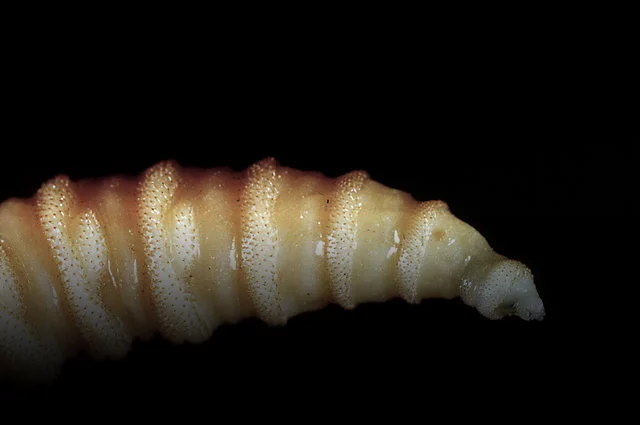
The Invisible Wall: Tech’s Biosecurity Blind Spot
The recent confirmation of New World screwworm in South Texas isn’t just an agricultural headache; it’s a stark, squirming indictment of where the global technology industry chooses to focus its considerable might. While headlines fixate on generative AI’s latest multimodal party trick or the metaverse’s perpetual promise, a biological threat, slow-moving but devastating, has quietly breached a national border. This isn’t a story for cattle ranchers alone; it’s a critical lesson in neglected frontiers for applied technology, a domain consistently deprioritized by venture capital’s myopic chase for scalable consumer platforms.
For years, these ravenous flesh-eating flies have been making their way up through Central America, a biological creep demanding a proactive, tech-enabled response. Yet, the border-security conversation in the United States, and indeed globally, remains fixated on physical barriers and human surveillance, largely ignoring the insidious infiltration vectors of invasive species. This stark contrast highlights a fundamental oversight: a highly digitized world still struggles with fundamental biosecurity, especially when the threat lacks the instant gratification or viral appeal of a new gadget launch.
Silicon Valley, with its endless appetite for ‘disruption,’ seems utterly uninterested in problems that don’t promise immediate, exponential returns or can’t be neatly packaged into an app icon. There is a staggering absence of investment in advanced sensor networks, satellite imagery analysis paired with sophisticated predictive analytics for ecological shifts, or specialized drone surveillance payloads designed for early pathogen detection. The capabilities exist within current tech stacks, but the commercial impetus, and thus the funding, simply does not.
This isn’t a complex, theoretical challenge; it’s a distributed, biological infiltration demanding real-world, rugged technological solutions. Imagine AI-powered pheromone traps, genetic sequencing on-the-go for rapid identification, or even autonomous ground robots patrolling agricultural perimeters. These are not sci-fi concepts, but readily achievable engineering feats that could provide critical layers of defense against threats like the screwworm, which rattled the US cattle industry from a confirmed case in a 3-week-old calf in Zavala County, Texas.
From Farms to Algorithms: Re-evaluating Agritech Investment
The current agritech landscape, while growing, remains largely focused on maximizing yield, optimizing resource use, and streamlining supply chains within existing farming paradigms. We see smart irrigation systems, precision farming drones for crop spraying, and IoT sensors for soil health, all valuable. However, the proactive defense against transboundary biological threats—true biosecurity—is often an afterthought, relegated to governmental agencies with limited budgets and often outdated tools.
The confirmation of the screwworm in Texas exposes this gap, showcasing how a threat that has been advancing for ‘several years’ can evade detection until it’s already on sovereign soil. This incident should compel a re-evaluation of agritech investment priorities, shifting some focus from pure productivity gains to fundamental resilience. Why are we not seeing massive venture capital rounds for companies developing advanced epidemiological models for livestock, or rapid, field-deployable genomics sequencing tools to identify threats before they become outbreaks?
The truth is, this current framing benefits a tech ecosystem that prioritizes digital real estate over tangible biological threats. It allows lucrative investments in social media, adtech, or consumer-facing AI chatbots to overshadow critical infrastructure needs that lack the same glamorous appeal or promise of a quick, massive exit. The challenge of a tiny fly, however devastating, simply doesn’t fit the ‘move fast and break things’ ethos, nor does it typically generate the hockey-stick growth curves demanded by institutional investors.
This is a systemic failure, not a technological one. We have the data science talent, the sensor technologies, and the machine learning algorithms capable of building robust early warning systems. The problem is one of incentive. Building the digital immune system for our food supply—a critical component of national security and economic stability—lacks the immediate, high-margin appeal of the next viral app. Until that calculus changes, we remain vulnerable to threats that are anything but high-tech.
Beyond the Buzzword: A Call for Resilient AI
The screwworm in South Texas isn’t just a localized problem for the USDA or the NVSL; it is a global indicator. From avian flu outbreaks impacting poultry farms to devastating crop blights, the interconnectedness of global trade and environmental change means biological threats are increasingly dynamic and pervasive. Our technology response needs to reflect this reality, moving beyond fashionable buzzwords to address foundational, systemic vulnerabilities.
We need a concerted shift towards what I call ‘resilient AI’ – artificial intelligence not just focused on hyper-personalization or efficiency gains, but on safeguarding the core systems that sustain societies. This includes robust AI for supply chain resilience, capable of modeling cascading biological risks and suggesting mitigation strategies before they cripple an industry. It demands investing in open-source platforms for global pathogen tracking and collaborative data sharing among nations, acknowledging that biological borders are far more permeable than political ones.
The current tech narrative, predominantly shaped by a few concentrated innovation hubs, often misses the real-world implications of these slower, yet profound, crises. While Silicon Valley obsesses over digital empires, the quiet war against biological invaders continues in the physical world, often with outdated weaponry. The absence of sophisticated tech at this front line is not a technological limitation, but a collective strategic oversight.
Ultimately, the true measure of our technological advancement shouldn’t solely be in the speed of our processors or the sophistication of our virtual worlds. It should also be measured by our ability to protect the most fundamental elements of our existence – our food, our environment, and our collective health – from threats, both digital and biological, seen and unseen. The humble screwworm offers a potent, if uncomfortable, reminder of where the real innovation might be most urgently needed.
