
F1 Simulators: The Covert Frontier of Digital Twin Fidelity
- Artificial Intelligence
Arjun Vedanta
- 0
- 4 minutes read
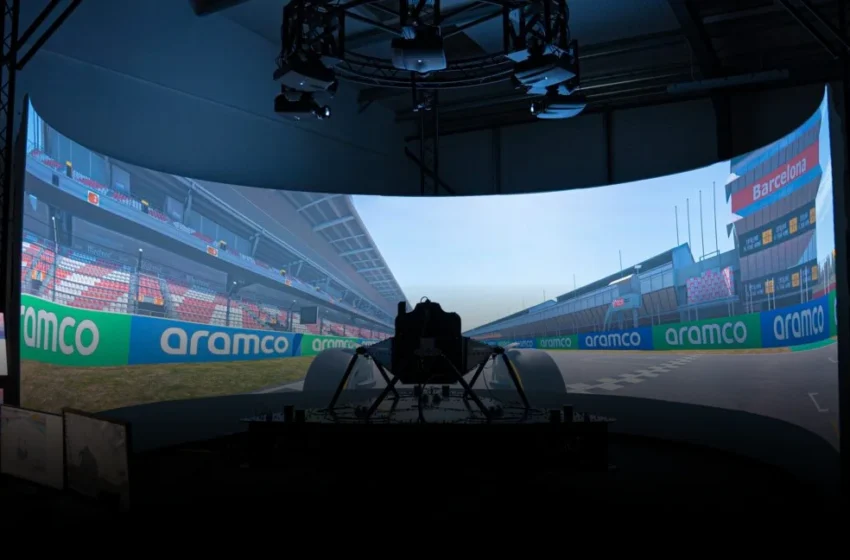
F1’s Microsecond Obsession Redefines Digital Twins
The multimillion-dollar driver-in-the-loop (DiL) simulators now standard across Formula 1 teams represent an engineering and computational extreme, pushing the boundaries of digital twin technology in ways few enterprise or consumer applications truly grasp. While the mainstream tech press marvels at virtual factory floors or predictive maintenance models, the hyper-competitive world of F1 has quietly—and secretively—been investing in a form of real-time simulation where latency is not merely a performance metric, but an existential threat.
Since the early 2000s, when teams like McLaren, Toyota, and Ferrari likely pioneered their adoption, these simulators have become the crucible where human and machine interface in a feedback loop measured in microseconds. Ash Warne, founder and CTO of Dynisma Motion Generators, a UK-based firm supplying high-fidelity systems to Ferrari, Alpine, and soon Cadillac, articulates this as an “intimate link” between driver input, car response, and immediate reaction. This isn’t a theoretical exercise; it’s a dynamic closed system demanding absolute synchronicity, a level of fidelity that makes high-end consumer multi-axis setups costing tens of thousands of dollars look like toys.
The Unseen Cost of Absolute Reality
For an F1 team, the cost of a top-tier DiL simulator, potentially reaching $10 million from a specialist like Dynisma, isn’t about luxury. It’s about chasing infinitesimal gains in a sport where hundredths of a second separate triumph from obsolescence. Most digital twins, whether in manufacturing, urban planning, or logistics, operate with latency tolerances measured in milliseconds, or even seconds. Their value lies in predictive analytics, design iteration, or operational oversight. The digital twin of a Formula 1 car, however, must replicate physical reality so perfectly that a human driver’s proprioception remains entirely convinced it is real.
This requires not just powerful computational fluid dynamics (CFD) and sophisticated physics engines, but an entire ecosystem of bespoke hardware and software capable of processing vast datasets and rendering precise haptic feedback virtually instantaneously. The challenge isn’t just modeling aerodynamics or tire degradation, but simulating the minute G-forces, vibrations, and tactile sensations that a driver interprets subconsciously. This level of realism demands a dedicated infrastructure for high-performance computing (HPC) that often operates in a highly proprietary, black-box environment, making direct comparisons to more open-source or commercial simulation platforms difficult and often misleading.
Frankly, for all the billions poured into ‘metaverse’ promises, this is the true bleeding edge of digital reality: not pixel density, but physics density, where the illusion of reality is so perfect it enables human performance at the absolute limit.
Beyond the Race Track: A Niche Too Specific?
The astonishing precision achieved by F1 simulators raises a critical question about the broader implications for technology: is this an indicator of future digital twin capabilities across industries, or a fascinating, incredibly expensive niche? The incentive for F1 teams to invest such colossal sums is clear: any fractional advantage gleaned from simulator work translates directly to on-track performance, driver development, and ultimately, championship points and commercial success. The return on investment, while often opaque, is tied to the very survival and prestige of the team.
Yet, the specific demands of F1—hyper-specialized aerodynamics, bespoke components, and a unique human-machine interface—mean that much of the innovation in these simulators remains highly tailored. While the underlying principles of low-latency data processing and advanced physics modeling are universally applicable, the immediate transferability of these multi-million dollar systems to, say, aerospace design, medical surgery training, or autonomous vehicle development remains debatable. These other fields have different priorities and latency tolerances. An aerospace engineer might prioritize long-term material stress analysis over immediate driver proprioception; a surgeon might need haptic feedback on tissue resistance, but not the minute vibrations of a chassis.
The extreme fidelity developed for F1 serves as a powerful testament to what digital twins *can* achieve when cost is a secondary concern to performance. However, it also underscores a potential divergence: the general-purpose digital twin market may optimize for accessibility and scalability, while the ultra-niche, ultra-demanding sectors like F1 continue to push an entirely separate, extraordinarily expensive frontier, one that offers tantalizing glimpses of digital perfection, but not necessarily a roadmap for mass adoption.
