
America’s Green Energy Surge Defies Political Winds, Driven by Data Centers
- Tech
Arjun Vedanta
- 0
- 5 minutes read
The Unseen Hand of Power Demand
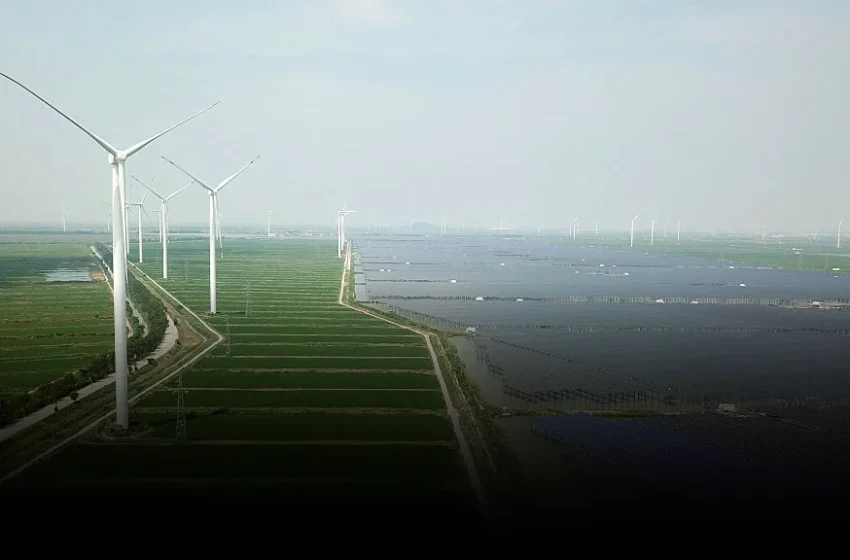
Forty-five gigawatts. That’s the staggering new record for clean energy capacity additions expected this year in the United States, an amount equivalent to powering an entire nation like Turkey. This isn’t just a number; it’s a defiant economic statement, particularly when one considers the persistent efforts by the Trump administration to throttle the very solar and wind projects now expanding at an unprecedented rate. The narrative of political obstructionism versus technological inevitability has rarely been so starkly illustrated.
The current surge, marking a roughly 25 percent increase over the previous year’s record, cannot be explained by market sentiment alone. S&P Global Energy points to multiple catalysts, but one stands out as a tectonic shift: the insatiable energy demands of **AI data centers**. These digital behemoths, processing everything from large language models to complex scientific simulations, require staggering amounts of electricity. Each new data center, particularly those designed for AI workloads, represents a concentrated load that existing grids struggle to accommodate without new, efficient generation sources.
Globally, the scramble for computing power is intensifying, and the energy footprint of artificial intelligence is rapidly becoming a silent, dominant force in national energy policy debates. This dynamic transcends the parochial politics of Washington, forcing a fundamental re-evaluation of energy infrastructure needs. When combined with other pressures like elevated global energy prices—exacerbated by geopolitical events such as the US president’s actions in Iran—the economic imperative to secure cheaper, more stable power sources becomes paramount, irrespective of a stated anti-green agenda.
A Pragmatic Capitulation?
The original narrative suggested a White House actively working to diminish renewable energy’s role, yet here we are, witnessing a boom on its watch. This isn’t a sudden ideological conversion; it’s a pragmatic capitulation. The administration’s ‘pragmatism’ is less a pivot and more a concession, a reluctant acknowledgement that even the most ideologically committed cannot halt the raw physics of supply and demand, particularly when it comes to keeping the lights on for new, politically popular industries like AI.
The incentive structure at play is multifaceted. Developers are rushing to capitalize on expiring tax credits, creating an immediate, albeit potentially temporary, acceleration in project development. This push is undeniably intensified by the desire to lock in those financial benefits, creating an artificial surge that masks a deeper, more organic shift in energy economics. This timing serves both the developers eager to maximize subsidies and an administration keen to claim economic growth, regardless of its ideological origins.
It seems the allure of a booming economy, even one underpinned by the very technologies once decried, proves irresistible. For all the rhetoric about fossil fuel supremacy, the **economic reality** is that new, utility-scale solar and wind projects are often the most cost-effective and fastest to deploy to meet surging demand. The sheer scale of new industrial load, particularly from hyperscalers building out AI infrastructure, creates an urgent need that overrides political preferences. This scenario illuminates the limitations of executive power when confronted by the foundational requirements of a modern, technologically advanced economy.
Beyond the Hype Cycle
This unexpected clean energy surge, fueled by the accelerating AI arms race, holds significant implications far beyond Washington’s Beltway. It underscores a crucial global trend: the energy transition is no longer solely a function of environmental policy or ideological advocacy; it is increasingly a matter of **economic competitiveness** and grid stability. Nations that can rapidly deploy new, sustainable generation will gain an advantage in attracting and powering the next generation of digital infrastructure.
From Singapore to London, the conversations around AI’s compute requirements are driving energy infrastructure investments that look past short-term political cycles. Germany, for instance, continues its aggressive decarbonization efforts, while China aggressively invests in both renewables and advanced nuclear to secure its future energy needs. The US, despite its internal political skirmishes, is now effectively being pulled along by the relentless market pull of data center expansion and the global race for AI dominance.
The fundamental challenge remains: how to integrate this new, distributed generation efficiently into an aging grid infrastructure. This will require significant investment in smart grid technologies, energy storage solutions, and robust transmission lines. The current boom, while impressive in raw gigawatts, will ultimately test the resilience and adaptability of America’s energy network. What we are witnessing is not merely a policy shift, but a systemic reorientation of energy priorities, driven by silicon and code as much as by sunshine and wind.
