
The Hidden Cost of Smart E-Bike Shifting: Automation’s Price on Rider Skill
- Electric Mobility
Arjun Vedanta
- 0
- 6 minutes read
The Allure of Autonomy on Two Wheels
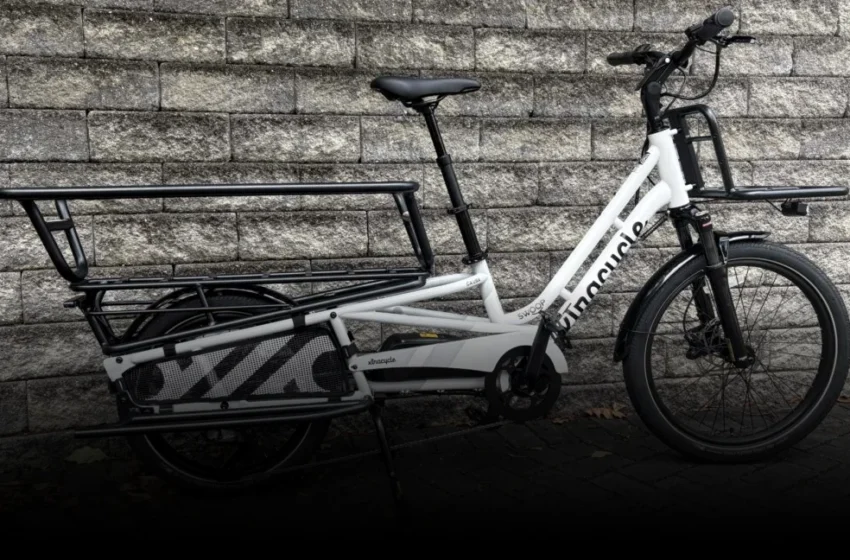
The quiet hum of an electric motor assisting a rider up a steep incline has long been the primary draw of the e-bike revolution. But now, another layer of convenience is being woven into the fabric of the riding experience: fully automatic gear shifting. On the surface, the proposition is undeniably appealing, particularly for heavier machines like the Xtracycle Swoop ASM cargo bike recently outfitted with Shimano’s advanced system. This $4,500 behemoth, designed to haul everything from children to groceries, now promises to remove one of cycling’s most fundamental interactions from the rider’s plate.
For years, most e-bikes have been gathering precise data points: your cadence, the torque you’re applying, and the speed at which you’re moving. This confluence of information, processed by an onboard electronic brain, allows the system to determine what it deems the “optimal” gear at any given moment. Shimano, a titan in bicycle componentry, has effectively translated this data into an intelligent actuator, eliminating the need for manual input. It’s a compelling vision for urban commuters and casual riders, promising a seamless, thought-free journey.
The convenience is clear: no more fumbling with shifters at a red light, no missed downshifts before a sudden climb. For someone grappling with a hundred pounds of cargo, the mental load reduction is significant. This technology moves e-bikes further away from being a mere assisted bicycle and closer to a truly autonomous mobility solution, blurring the lines between traditional cycling and more automated forms of transport.
The Invisible Hand: What We Gain, What We Lose
Yet, this progression toward a fully automated cycling experience carries a subtle but profound implication beyond mere ease of use. While Silicon Valley narratives often laud convenience as the ultimate good, we must ask: what is the true cost of outsourcing a fundamental skill like gear management to an algorithm? The notion that a machine’s predetermined ‘optimal’ gear is universally superior to a rider’s intuitive choice is a deeply Californian assumption.
Gear selection, much like feathering a clutch in a manual car, is an integral part of the rider’s connection to their machine and the terrain. It’s a skill that develops over time, a nuanced understanding of effort, momentum, and anticipation. When an electronic system consistently makes these decisions, the rider is relegated to a passenger, albeit an active one, on their own journey. This isn’t just about making things easier; it’s about slowly eroding the very engagement that defines the act of cycling for many.
I’ve observed this pattern repeatedly across various tech sectors: the pursuit of frictionless experience often paves a path toward a subtle but significant disempowerment of the user. This isn’t Luddism; it’s a skeptical observation of technological progress. Forcing a bike to shift for you, however intelligently, removes a layer of agency and mastery. We risk creating a generation of riders who never truly learn the rhythm and feel of their machine, much like a generation of drivers who can operate a car but have no understanding of its mechanics.
The incentive for companies like Shimano is clear: market differentiation and expansion. By removing perceived barriers to entry — such as the ‘complexity’ of manual shifting — they can appeal to a broader demographic, individuals who might otherwise shy away from cycling. It’s a strategic move to capture market share in the rapidly expanding e-bike segment, pushing the boundaries of what constitutes a ‘smart’ bicycle and setting new industry benchmarks that competitors will inevitably chase.
Automation Creep and the Future of Cycling Culture
The integration of advanced automation into e-bikes, spearheaded by innovations from companies like Shimano and implemented by brands such as Velotric and Xtracycle, is a microcosm of a larger trend across the transportation sector. From adaptive cruise control in cars to automated landing systems in aircraft, the ‘electronic brain’ is steadily encroaching on human decision-making. In cycling, this means that features like smart suspension systems, integrated GPS navigation, and now automatic transmissions are creating a holistic, interconnected rider experience.
The concern, however, extends beyond individual skill. As these systems become more complex and proprietary, questions around long-term maintenance, repairability, and technological obsolescence become more pressing. What happens when a proprietary electronic shifting module fails five years down the line, and replacement parts are scarce or require specialized diagnostic tools? The simplicity and longevity of traditional mechanical components might soon become a nostalgic relic, replaced by systems with built-in upgrade cycles and dependencies.
This isn’t to say automatic shifting lacks merit. For individuals with mobility challenges or those for whom cycling is purely a utility, the benefits are tangible. But for the discerning rider, for those who appreciate the tactile feedback and the subtle art of managing their own machine, this trend presents a challenge. The global e-bike market is growing exponentially, attracting diverse users, and the industry is responding by offering a spectrum of experiences. However, the prevailing current pushes towards greater automation, implicitly suggesting that a less engaged, more passive rider is the desired outcome.
The true measure of technological advancement isn’t just what it enables, but what it displaces. While the Xtracycle Swoop ASM offers unparalleled convenience, it also invites a critical reflection on what we value in our interaction with technology. Are we building better bikes, or are we simply building better algorithms? The distinction matters, particularly as the very essence of human-powered transport undergoes its most significant transformation in decades.
