
Toyohiro Akiyama’s Forgotten Legacy: How a Journalist’s Space Flight Rewrote Commercial Space
- Space
Arjun Vedanta
- 0
- 6 minutes read
The Quiet Genesis of Commercial Space Media
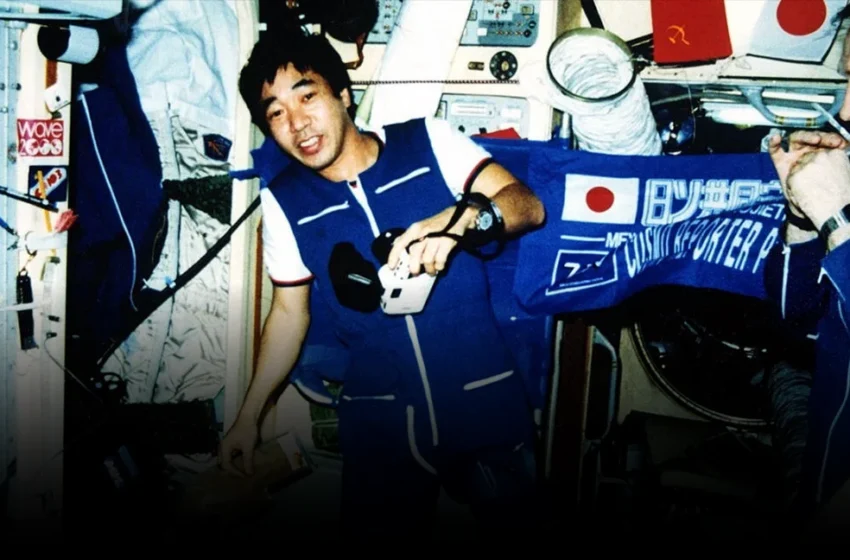
The news of Toyohiro Akiyama’s passing at 84 years old barely registered in the US tech press, framed largely as a historical footnote about the first Japanese person in space. Yet, Akiyama’s 1990 journey aboard Soyuz TM-11 was far more than a national milestone; it was a quiet, almost accidental, genesis moment for two intertwined industries now commanding billions: commercial spaceflight and space media.
While Silicon Valley narratives often place the birth of the New Space economy with Elon Musk’s ambitions or Jeff Bezos’s fortunes, the seed of commercial funding for human spaceflight was sown decades earlier in a very different context. Akiyama’s flight, sponsored by Tokyo Broadcasting System (TBS) for a reported $12 million, was a raw, unfiltered experiment in using space for media spectacle, setting a precedent that no amount of present-day venture capital can fully replicate.
TBS, celebrating its 40th anniversary, wasn’t investing in rocket reusability or satellite constellations; it was buying eyeballs, a unique differentiator in a crowded broadcast market. This incentive, a pure media play, is often glossed over, yet it defined Akiyama’s mission: to report live from orbit. He wasn’t a scientist, nor an astronaut in the traditional sense, but a correspondent, tasked with bringing the cosmic experience directly to living rooms—a vision still struggling to find its footing amidst today’s glossier, more self-congratulatory commercial space ventures.
The Unacknowledged Prequel to Space Tourism
Today, billionaires are lining up for orbital joyrides, and companies like Virgin Galactic and Blue Origin are positioning themselves as pioneers of space tourism. But Akiyama was the original commercial passenger, albeit one with a very specific, job-oriented mandate. His flight was not about personal gratification or technological demonstration; it was about content creation, a distinctly terrestrial business model transposed onto the final frontier.
The experience itself was far from luxurious. Akiyama endured weeks of rigorous training at the Gagarin Cosmonaut Training Center outside Moscow, preparing for a mission that included acute space sickness. His reports weren’t polished documentaries but raw, often difficult, dispatches from a cramped Soyuz capsule. This stark reality stands in sharp contrast to the curated, aspirational marketing collateral of modern space tourism, where the focus is firmly on comfort and awe rather than the sheer grind of space adaptation.
What we miss when we fixate on today’s flashy launches and celebrity passengers is that Akiyama’s mission—a Japanese media corporation paying the Soviet Union to send a journalist into space—represented an extraordinary geopolitical and technological convergence. It showcased a pragmatic, transactional approach to space access long before private enterprise became a dominant force. This wasn’t about Cold War rivalries or national prestige in the same way; it was about economic opportunity and global reach, pushing the boundaries of what space was for.
The Overlooked Power of Space Media
Akiyama’s primary role as a journalist on Soyuz TM-11 highlighted an often-neglected aspect of space exploration: its profound impact on public perception and understanding. He was the first human to directly report from orbit, providing an unprecedented, immediate conduit between the cosmic and the common. In an era predating ubiquitous internet access, his video and radio dispatches offered a rare, authentic glimpse into an experience previously reserved for highly trained government personnel.
This journalistic foray into space was a critical precursor to the current proliferation of space media, from live-streamed rocket landings to astronaut vlogs from the International Space Station. Yet, the current ecosystem often feels like an extension of corporate PR, controlled heavily by the very entities launching rockets. Independent, critical reporting from space remains a largely unfulfilled promise, replaced instead by branded content and celebratory narratives.
Akiyama’s mission, therefore, poses a quiet challenge to the current space industry: are we truly democratizing space, or merely commercializing its spectacle? The raw, often uncomfortable, dispatches from orbit by Akiyama offered a genuine perspective that today’s perfectly framed social media posts from astronauts often lack. There is a fundamental difference between reporting on space and reporting from space, and the latter, by an impartial observer, is still vanishingly rare.
Beyond the Hype: Internationalization and Realpolitik
While US-centric reports often focus on domestic innovation, Akiyama’s flight was a powerful testament to international collaboration, even if commercially driven. It involved Japan, the Soviet Union (then on the brink of collapse), and technology developed under a different political system. This messy, complex reality of global engagement in space is frequently overshadowed by the triumphant narratives of national or corporate exceptionalism.
The commercial space sector’s current trajectory, dominated by a few powerful US companies, risks obscuring the diverse, often unexpected pathways that led us here. Akiyama’s journey, a commercial transaction between a Japanese broadcaster and the Soviet space program, represents a significant deviation from the purely scientific or military-industrial motivations that initially drove space exploration. It underscored the emerging role of non-state actors and market forces in shaping access to orbit, long before ‘disruptive innovation’ became a Silicon Valley mantra.
The enduring lesson from Akiyama’s flight is that space isn’t just a frontier for rockets and payloads; it’s a canvas for human ambition, media, and commerce, often in combinations the engineers never intended. His legacy isn’t just about being first, but about proving that space could be a platform for broader human activity, even if that activity was as mundane, yet vital, as telling a story.
