
Human Exoskeletons: Augmenting American Rescuers and Beyond
Arjun Vedanta
- 0
- 9 minutes read
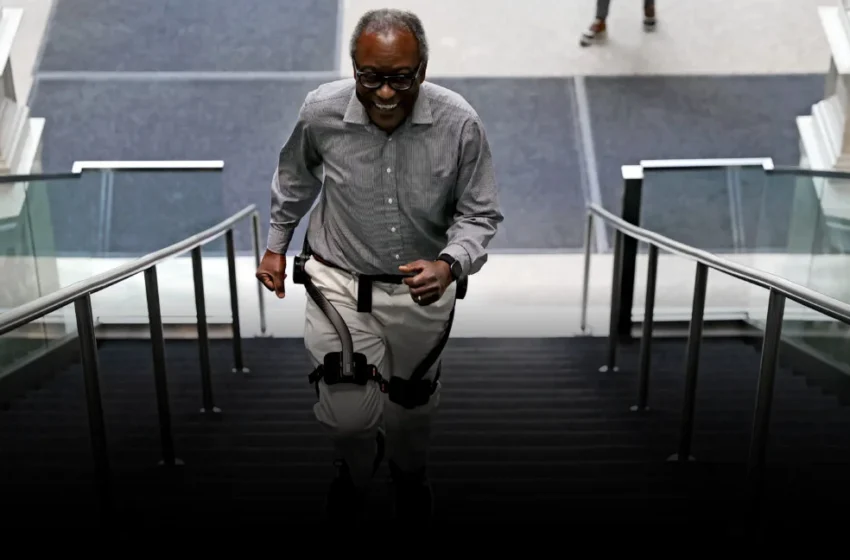
The deployment of powered human exoskeletons by Seattle Mountain Rescue marks a significant advancement for wearable robotics in critical US operations, promising enhanced strength and endurance for first responders. This trial signifies a pivotal step towards wider adoption of assistive technology, with profound implications for public safety, industrial efficiency, and military applications across the nation.
Members of Seattle Mountain Rescue are currently trialing these sophisticated assistive devices in the rugged wilderness of the US Pacific Northwest. Designed to boost lower-body strength for climbing and carrying heavy loads, these exoskeletons aim to increase rescuers’ speed and endurance during time-sensitive searches for stranded individuals. This real-world application provides invaluable data for technology developers and highlights the practical potential of human augmentation in demanding American environments, where every ounce of strength and minute of speed can be life-saving.
What Are Human Exoskeletons and Why Now?
A human exoskeleton is an external mechanical structure that attaches to the body, designed to enhance the wearer’s physical capabilities. Moving beyond the realm of science fiction, these powered frames are becoming increasingly viable due to concurrent advancements in several key technological areas.
Decades of research in robotics, materials science, and artificial intelligence are converging to make practical exoskeletons a reality. Miniaturized, powerful electric motors, lighter yet stronger composite materials, and more efficient battery technology now allow for devices that are both robust and relatively comfortable to wear. Crucially, sophisticated control algorithms, often leveraging AI and machine learning, enable these machines to interpret user intent and move synergistically with the wearer, reducing lag and improving safety.
The US has been a significant hub for this innovation, with substantial investment from both government agencies like DARPA and private industry. This push stems from a recognition of the technology’s potential to address critical challenges in sectors ranging from defense to healthcare and industrial labor.
Beyond the Wilderness: Diverse American Applications
While the Seattle Mountain Rescue initiative focuses on emergency response, the broader potential for human exoskeletons spans numerous critical American sectors. Their ability to augment strength and endurance could redefine work in physically demanding roles, improve safety, and even extend the careers of an aging workforce.
- Industrial & Manufacturing: Companies like Boeing and General Motors are exploring exoskeletons to reduce worker fatigue and injuries in assembly lines, particularly for tasks involving heavy lifting or sustained overhead work. Passive exoskeletons, which use springs or counterweights rather than motors, are already in use for these applications.
- Military & Defense: The US military has long invested in exoskeleton research, aiming to enable soldiers to carry heavier gear over longer distances, navigate challenging terrains, and potentially enhance protection. Programs like those by Lockheed Martin and Sarcos Robotics demonstrate this focus.
- Healthcare & Rehabilitation: For individuals with mobility impairments due to spinal cord injuries or stroke, powered exoskeletons offer the ability to stand and walk, improving quality of life and aiding rehabilitation. US-based companies such as Ekso Bionics and ReWalk Robotics are pioneers in this therapeutic space.
- Logistics & Warehousing: With the boom in e-commerce, facilities operated by giants like Amazon face immense pressure. Exoskeletons could assist workers in lifting packages, reducing strain and increasing efficiency in repetitive tasks, potentially mitigating injuries and boosting productivity.
The Seattle Mountain Rescue trial provides a vivid example of how this technology is moving from controlled lab environments into the unpredictable, real-world conditions where human performance is paramount.
| Application Area | Key Benefit | Typical Exoskeleton Type |
|---|---|---|
| Search & Rescue | Enhanced endurance, strength for heavy loads in rugged terrain | Powered lower-body (e.g., hip/leg assist) |
| Industrial & Manufacturing | Fatigue reduction, injury prevention for repetitive tasks or heavy lifting | Passive or powered upper/lower body (e.g., arm support, lift assist) |
| Military & Defense | Increased load carriage, mobility in difficult environments, soldier protection | Powered full-body or lower-body |
| Medical & Rehabilitation | Gait training for paralysis, mobility for disabled individuals, therapist assist | Powered lower-body (therapeutic), full-body (mobility assist) |
What Are the Unseen Hurdles for Exoskeleton Adoption in the US?
Despite their compelling advantages, widespread adoption of human exoskeletons, especially the powered variety, faces significant hurdles within the US market. The initial acquisition cost is a major barrier, with advanced units potentially costing tens of thousands of dollars. This price point can be prohibitive for many public safety agencies and smaller businesses without substantial grants or specialized funding.
Beyond the sticker price, ongoing maintenance, software updates, and specialized training for users and technicians add to the total cost of ownership. Battery life remains a practical limitation for prolonged field operations, requiring careful planning for charging or hot-swapping power packs. Furthermore, the comfort and ergonomics of wearing a substantial mechanical device for extended periods are critical factors affecting user acceptance and performance.
Regulatory and safety concerns, particularly from agencies like OSHA (Occupational Safety and Health Administration), will become increasingly prominent as industrial use expands. Questions surrounding liability in case of malfunction or injury, standardization of performance, and long-term health impacts on users need comprehensive answers. Integrating these devices into existing workflows and ensuring interoperability with other gear also presents logistical challenges for diverse American organizations.
The Road Ahead: Impact on US Workforce and Innovation
The expansion of human exoskeleton technology in the US will inevitably spark discussions about its impact on the American workforce. While fears of job displacement are often raised, the more likely scenario is job augmentation, where exoskeletons enable workers to perform tasks more safely, efficiently, and for longer durations. This shift will necessitate new training programs and skill development, potentially fostering a new segment of the tech-enabled labor force.
This evolving landscape will also catalyze further innovation within US robotics, materials science, and artificial intelligence sectors. The demand for lighter, more powerful, and intuitively controlled exoskeletons will drive research into advanced battery chemistries, bio-inspired robotics, and sophisticated sensor fusion. Companies like SuitX, based out of California, exemplify this ongoing domestic drive for innovation in assistive devices.
The ethical implications of human augmentation, including questions of equitable access and potential disparities in physical capability, will also become central to public discourse. As exoskeletons move from specialized rescue operations to everyday industrial and public use, policymakers will need to grapple with these complex societal questions.
Conclusion
The Seattle Mountain Rescue’s trial of human exoskeletons is more than just a local news story; it’s a powerful indicator of a broader technological shift in the US. It underscores the potential for wearable robotics to fundamentally enhance human capability in physically demanding, often life-or-death, situations. While the promise of strength, endurance, and safety is immense, significant challenges remain in terms of cost, comfort, and integration into existing American operational frameworks.
Key Takeaways:
- Human exoskeletons are transitioning from conceptual to practical deployment in critical US public safety operations, exemplified by Seattle Mountain Rescue’s trial.
- The technology holds transformative potential across diverse American sectors, including industrial, military, and healthcare applications, by augmenting human strength and endurance.
- Widespread adoption faces substantial hurdles, primarily high costs, comfort limitations, battery life, and complex regulatory and integration challenges.
- Continued US innovation in robotics and AI, coupled with evolving policy, will be crucial in shaping the future and accessibility of wearable assistive technologies.
What is a human exoskeleton?
A human exoskeleton is an external mechanical framework worn on the body that uses motors, sensors, and sometimes passive mechanisms to enhance the wearer’s physical capabilities, such as strength, endurance, or mobility. It essentially creates an external skeletal support system.
How are exoskeletons being used in the US today?
Beyond the Seattle Mountain Rescue trial, exoskeletons are increasingly used in US manufacturing to prevent worker injuries, in military research for soldier augmentation, and in medical rehabilitation to help patients regain mobility. These applications demonstrate the technology’s growing versatility.
What are the main challenges for exoskeleton adoption in the US?
Key challenges include the high acquisition and maintenance costs of advanced units, ensuring user comfort and prolonged battery life for real-world scenarios, and navigating regulatory complexities related to safety, liability, and integration into established workflows across various American industries.
