
Unpacking the Tech Behind National Geographic’s ‘Africa: Earth’s Wild Home’
- Tech
Arjun Vedanta
- 0
- 12 minutes read
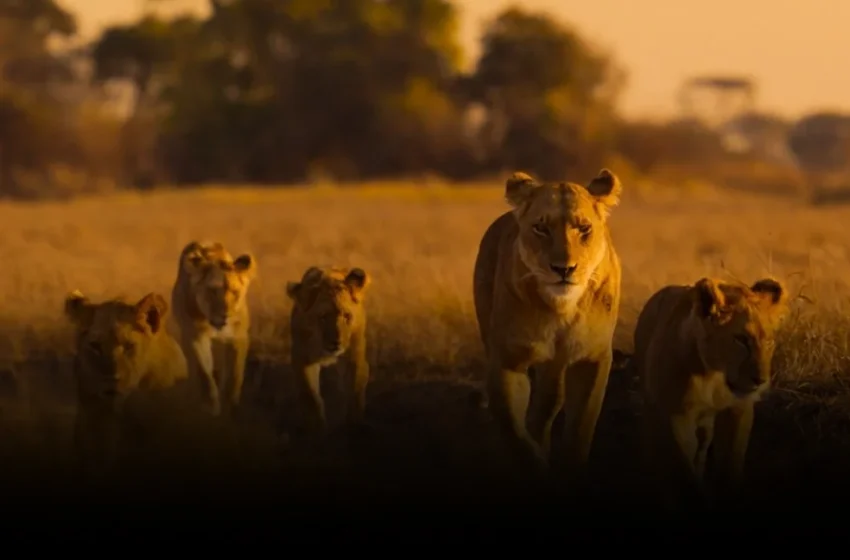
National Geographic’s new seven-episode documentary series, “Africa: Earth’s Wild Home,” represents more than just a stunning visual journey; it showcases the cutting-edge technological advancements now indispensable for capturing the planet’s most elusive wildlife and ecosystems. Filmed over four years across nearly 30 African countries, this series, narrated by Wunmi Mosaku, stands as a testament to how sophisticated camera systems, drone technology, and advanced data management are fundamentally reshaping the art and science of natural history filmmaking, delivering unprecedented immersion to American audiences.
This ambitious project, envisioned as the inaugural installment in a franchise covering all seven continents, elevates the bar for wildlife storytelling. For US tech professionals and enthusiasts, the series offers a fascinating case study in how hardware, software, and computational power converge to overcome immense logistical challenges, from capturing intimate animal behaviors in 8K resolution to managing petabytes of footage. It’s a production that doesn’t just show nature; it demonstrates how technology brings us closer to understanding its intricate dance and the critical conservation efforts underway.
How Advanced Filming Technology Powers Unprecedented Wildlife Access
The ability to spend four years capturing the breadth of African wildlife across 30 diverse nations speaks volumes about the evolution of filming technology. Gone are the days of bulky, stationary cameras; modern productions like “Africa: Earth’s Wild Home” rely on a highly specialized toolkit that blends cinematic quality with extreme ruggedness and portability. These tools are critical for filmmakers to achieve the intimate, high-resolution shots viewers expect.
Miniaturized 8K cameras, often paired with sophisticated stabilization gimbals, allow cinematographers to get closer to subjects without disturbing them, capturing incredible detail—from a black panther’s fur to a pangolin’s scales. The resolution provides a level of fidelity that makes home viewing on large 4K and 8K displays in American homes an almost holographic experience, far surpassing standard high definition.
- Drone Technology: Unmanned aerial vehicles (UAVs) equipped with professional-grade cameras have revolutionized establishing shots and sweeping landscape vistas, offering perspectives previously impossible without helicopters or fixed-wing aircraft. They allow for seamless transitions across vast plains, towering mountains, and intricate jungle canopies, all while minimizing environmental disturbance. Modern drones feature advanced GPS, obstacle avoidance, and extended flight times, making them indispensable for covering the 22 miles (35 km) or more needed to track migrating herds.
- Remote & Hidden Cameras: For animals sensitive to human presence, camera traps and remotely operated units, often powered by long-life batteries and managed via wireless networks, are deployed for weeks or months. These systems can be triggered by motion or programmed schedules, capturing behaviors like a chimp fishing for algae, a rare example of primate tool use, entirely undisturbed.
- Rugged Computing & Storage: Operating in remote African locales necessitates extremely durable computing equipment. Field teams rely on hardened laptops and portable solid-state drives (SSDs) designed to withstand extreme temperatures, dust, and humidity. These devices are essential for immediate footage review, basic editing, and data backup, often in environments where reliable power sources are scarce.
The logistical feat of maintaining and powering this advanced equipment across varied and challenging terrains is a significant technological achievement in itself. Solar charging solutions, satellite communication systems, and custom-built, all-terrain vehicles become as crucial as the cameras themselves, ensuring continuous operation far from conventional infrastructure.
The Data Deluge: Managing Petabytes of Pristine Footage
Capturing thousands of hours of 8K footage from nearly 30 countries generates a staggering volume of data. For “Africa: Earth’s Wild Home,” this likely translates into multiple petabytes (a petabyte is 1,000 terabytes) of raw video, audio, and metadata. Managing this immense digital archive is a significant technological challenge that requires robust solutions, many of which are developed and refined within the US tech industry.
The sheer scale of data necessitates a sophisticated workflow:
- Ingestion and Backup: Footage from memory cards is immediately transferred to multiple redundant storage systems in the field. This often involves portable RAID arrays and secure cloud synchronization where internet connectivity allows. Data integrity is paramount, given the irreplaceable nature of the captured moments.
- Cloud-Based Collaboration: Once transported to central hubs, often in the US or Europe, raw footage is typically ingested into high-performance cloud storage solutions, such as Amazon S3 or Google Cloud Storage. This enables distributed teams—editors, sound engineers, visual effects artists, and the series producers—to access and work with the material collaboratively, regardless of their physical location.
- AI-Assisted Metadata and Tagging: Manually sifting through thousands of hours of footage to find specific animal behaviors or individuals would be an impossible task. Modern productions increasingly employ AI and machine learning algorithms to automatically analyze video content. These tools can identify species, track individual animals, timestamp specific actions, and even detect environmental conditions. This automated tagging system significantly accelerates the post-production process, allowing editors to quickly locate “a wild African black panther prowling for prey” or “an orphaned baby pangolin learning to climb.”
- High-Performance Computing for Editing: Editing high-resolution, uncompressed video requires immense computational power. Post-production studios utilize render farms and specialized workstations equipped with multi-core processors, vast amounts of RAM, and professional-grade GPUs. Software suites from companies like Adobe, Avid, and Blackmagic Design are optimized to handle these demanding workloads, facilitating the intricate layering of visuals, soundscapes, and narration.
This digital backbone ensures that the artistic vision of the series can be realized efficiently, transforming raw data into a coherent and compelling narrative. It highlights the growing interdependence between creative storytelling and advanced IT infrastructure.
Immersive Storytelling: What This Tech Means for US Viewers
For American consumers, the technological innovations behind “Africa: Earth’s Wild Home” translate directly into an unparalleled viewing experience. The goal is to transport the audience, to make them feel as if they are right there on the African plains or deep within a lush jungle, observing nature up close. This immersive quality is a direct result of several key technologies:
| Feature | Traditional Documentary | Modern “Africa: Earth’s Wild Home” |
|---|---|---|
| Resolution | Standard Definition (SD) or High Definition (HD) | Ultra High Definition (4K, 8K) |
| Color & Contrast | Standard Dynamic Range (SDR) | High Dynamic Range (HDR) |
| Audio | Stereo or Basic Surround Sound | Spatial Audio (e.g., Dolby Atmos) |
| Delivery | Broadcast TV, DVD | Streaming (OTT), On-demand, Blu-ray |
| Engagement | Passive Viewing | Potential for Interactive Extras |
The adoption of High Dynamic Range (HDR) is particularly impactful. HDR screens, now common in US households, display a wider spectrum of colors and much greater contrast between the brightest whites and darkest blacks. This means the vibrant hues of a sunset over the Serengeti or the subtle camouflage of a predator in shadow are rendered with breathtaking realism, providing a visual depth previously unattainable.
Furthermore, the sound design benefits from advancements in spatial audio technologies, such as Dolby Atmos. While the source does not explicitly state Atmos use, modern premium documentaries often employ it. This allows for a multi-dimensional soundscape where the rustle of leaves, the roar of a lion, or the chirping of insects can seem to come from specific directions, further enhancing the feeling of being present in the environment.
Wunmi Mosaku’s narration, as she told Ars, aims to “reconnect and celebrate this incredible continent where life is so diverse and so extreme and beautiful and relentless and peaceful.” This emotional connection is amplified by the technical prowess that delivers every nuanced visual and auditory detail directly into American living rooms, fostering a deeper appreciation for global biodiversity and the urgent need for its protection.
Beyond the Screen: Tech’s Role in Conservation and Future Franchises
The technology deployed for “Africa: Earth’s Wild Home” extends its impact far beyond entertainment. The final episode, highlighting local conservation leaders and researchers, underscores how these very tools are vital for scientific study and biodiversity preservation. High-resolution footage provides valuable data for ecologists, helping them monitor species populations, track migration patterns, and assess habitat health. Remote sensing data, collected via drones and satellites, informs conservation strategies and policy decisions.
For US-based conservation organizations and research institutions, collaborations with such technologically advanced productions offer significant benefits. The data gathered, combined with the educational reach of a National Geographic series, can drive public awareness and funding for critical environmental initiatives both domestically and abroad. The commitment to a franchise documenting all seven continents means a continuous demand for innovation, pushing the boundaries of what is possible in extreme environments, from the Arctic to the Amazon.
National Geographic’s ongoing investment in this high-tech approach serves as a model for other content creators and demonstrates a clear path forward for fusing entertainment with education and advocacy in the digital age. It’s a powerful reminder that while the stories are timeless, the means of telling them are constantly evolving.
Key Takeaways for Tech Enthusiasts:
- Modern nature documentaries are now deeply reliant on advanced camera systems, drone technology, and robust data management for production quality.
- The massive data footprint of 8K HDR filming necessitates sophisticated cloud infrastructure and AI-driven analytics for efficient post-production.
- These technological leaps provide US audiences with an unprecedentedly immersive viewing experience through ultra-high resolution, HDR visuals, and spatial audio.
- The same technologies used for filming are increasingly critical tools for global biodiversity research and conservation efforts, offering actionable data.
- National Geographic’s multi-continental franchise commitment signals a sustained demand for innovation in field-based tech and digital media workflows.
FAQ
What specific camera technology is used in modern nature documentaries like “Africa: Earth’s Wild Home”?
Modern productions often utilize miniaturized 4K and 8K cinematic cameras paired with advanced stabilization gimbals. Drone-mounted cameras are also crucial for aerial perspectives, and remote, often hidden, camera traps capture sensitive wildlife behavior without disturbance.
How do productions manage the vast amount of data generated by 8K filming?
Data management involves robust field storage solutions like portable RAID arrays, secure cloud-based storage for collaboration, and AI-assisted tools for automated metadata tagging and footage analysis. High-performance computing clusters are essential for processing and editing the massive files.
What does “High Dynamic Range (HDR)” mean for the viewer experience?
HDR enables displays to show a much wider range of colors and greater contrast between light and dark areas than standard displays. For viewers, this translates to more vibrant colors, deeper blacks, brighter whites, and a more lifelike, immersive visual experience when watching compatible content on HDR-enabled TVs.
