
NASA’s Venus Missions: A New Era for Unlocking Earth’s ‘Evil Twin’
- Space
Arjun Vedanta
- 0
- 10 minutes read
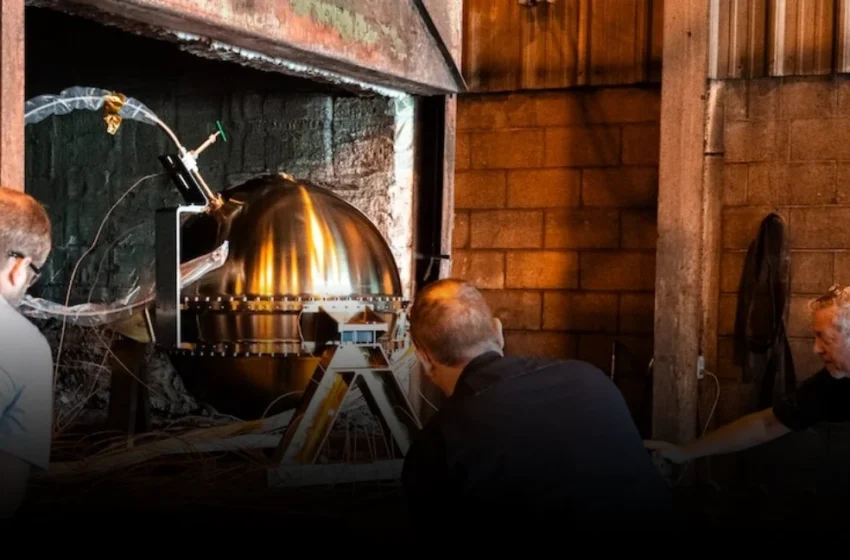
NASA’s DAVINCI and VERITAS missions mark a pivotal return to Venus, promising unprecedented data from Earth’s enigmatic twin. Slated for 2030 and 2032, these missions will unravel Venus’s extreme atmosphere and hidden surface, offering critical insights into planetary climate evolution and potentially Earth’s own future.
For decades, Mars dominated planetary exploration, leaving Venus largely unexamined after the initial Soviet and early US probes. This revitalized US focus on Venus exploration, driven by advancements in instrumentation and a pressing need to understand runaway greenhouse effects, positions the US at the forefront of a global effort to unlock Venus’s secrets. The stakes are high: deciphering Venus could inform our understanding of planetary habitability and critical climate science.
The Long Road Back to Earth’s “Evil Twin”
Venus, often called Earth’s “sister planet” due to its similar size and mass, took a drastically different evolutionary path. While Earth fostered life, Venus became a hellish crucible, a stark contrast that has fascinated and frustrated scientists for generations. Its incredibly dense, toxic atmosphere, primarily carbon dioxide, traps heat in a runaway greenhouse effect.
Early missions provided foundational, yet limited, data. The Soviet Union’s Venera program achieved the first successful landings on Venus in the 1970s and early 1980s, sending back a handful of blurry, color-corrected images of its rocky surface. NASA’s Pioneer Venus probes, launched in the late 1970s, provided crucial atmospheric and radar mapping data from orbit. These missions confirmed the planet’s hostile environment, with surface temperatures averaging 867 degrees Fahrenheit (464 degrees Celsius) and atmospheric pressure 92 times that of Earth’s sea level.
The extreme heat, crushing pressure, and corrosive sulfuric acid clouds made sustained exploration incredibly challenging. This led to a long hiatus in dedicated Venus missions, particularly from the US, as Mars, with its perceived potential for past or present life and more forgiving environment, became the primary focus of planetary science funding and ambition.
NASA’s Renewed Commitment: DAVINCI and VERITAS Lead the Charge
NASA is now poised to spearhead this comeback with two flagship missions, demonstrating a significant investment in understanding our closest planetary neighbor. These missions represent the agency’s first dedicated probes to Venus in over three decades, setting the stage for a new era of Venus exploration.
The first, the Deep Atmosphere Venus Investigation of Noble gases, Chemistry, and Imaging (DAVINCI) mission, is now slated for a December 2030 launch, a year earlier than previously planned according to NASA’s announcement. DAVINCI will deploy a sophisticated, parachute-assisted descent probe designed to plunge through Venus’s thick, layered atmosphere. During its descent, the probe will analyze the atmosphere’s composition, focusing on noble gases and trace chemicals, which are crucial for understanding the planet’s formation, volcanic activity, and climate history.
Critically, DAVINCI is designed to return the first direct images of the Venusian surface since the Soviet Venera 13 and 14 landers in 1982. These high-resolution images, taken during the probe’s brief operational window before succumbing to the intense heat and pressure, promise an unparalleled view of its tesserae (complex geological features) and other surface elements, offering vital clues about Venus’s geological processes.
Following DAVINCI, the Venus Emissivity, Radio science, InSAR, Topography, And Spectroscopy (VERITAS) orbiter will launch in November 2032. VERITAS will employ advanced radar technology to create high-resolution, 3D topographical maps of Venus’s obscured surface, effectively peering through the planet’s perpetually cloudy shroud. This will enable scientists to identify potential volcanic activity, evidence of plate tectonics (or the lack thereof), and the planet’s internal structure by measuring gravitational changes.
These complementary NASA missions are meticulously designed to provide a comprehensive picture of Venus, from its atmospheric layers down to its core. DAVINCI will sample the atmosphere directly, while VERITAS will map the surface and interior from orbit, addressing fundamental questions about Venus’s past habitability, its present-day geological activity, and its future evolution.
What These Missions Mean for US Science and Beyond
The return to Venus holds profound implications for US scientific endeavors and global understanding of planetary science. These missions are not just about exploring a distant world; they are about gaining critical insights that resonate with challenges facing Earth.
- Climate Models: Venus serves as a natural laboratory for a runaway greenhouse effect. Data from DAVINCI and VERITAS will refine climate models, providing crucial insights into how planetary atmospheres evolve under extreme conditions. Understanding Venus’s transition from a potentially Earth-like past to its current inferno offers stark, invaluable lessons for predicting and mitigating Earth’s own climate future.
- Planetary Habitability: By studying Venus’s past and present conditions, scientists can better understand the boundaries of habitability within and beyond our solar system. Did Venus once harbor oceans? What are the absolute limits for life? Answering these questions informs the search for life on exoplanets, helping refine the criteria for identifying potentially habitable worlds.
- Technological Innovation: Developing instruments and materials capable of surviving Venus’s hellish environment pushes the boundaries of engineering. Innovations in heat-resistant electronics, durable sensors, and communication systems developed for DAVINCI and VERITAS could yield breakthroughs applicable to other extreme environments, both on Earth and in space, fostering American ingenuity and technological leadership.
While NASA leads this renewed charge, the European Space Agency is also building its own orbiter, Envision, for launch to Venus in 2032, further highlighting a global scientific reawakening to Venus. Additionally, Rocket Lab aims to launch a privately funded probe as early as next year, searching for signs of organic material in the planet’s clouds. This collective effort underscores a powerful, shared global scientific interest in Venus, with NASA’s multi-mission approach solidifying the US’s leadership role.
Why Venus Now? A Convergence of Technology and Urgency
The timing for this Venusian renaissance is no coincidence. Decades of technological advancements have yielded more robust sensors, durable electronics, and heat-resistant materials capable of withstanding the planet’s inferno for longer durations than ever before. This new generation of instruments promises more detailed and sustained data collection.
Furthermore, a heightened global awareness of climate change on Earth has amplified the scientific community’s desire to understand Venus’s drastic transformation. Studying a planet that experienced such a catastrophic climate shift is no longer just an academic pursuit; it’s seen as a critical input for Earth science. Venus offers a cautionary tale and a unique case study in planetary evolution that cannot be ignored.
| Mission | Agency | Launch Target | Primary Objective | Type |
|---|---|---|---|---|
| DAVINCI | NASA | December 2030 | Atmospheric composition, surface imaging | Descent Probe |
| VERITAS | NASA | November 2032 | Radar mapping, surface topography | Orbiter |
| Envision | ESA | 2032 | Surface & interior analysis, atmospheric gases | Orbiter |
The upcoming NASA missions, DAVINCI and VERITAS, signify a pivotal moment for planetary science, shifting the focus back to Venus after decades. These ambitious projects are set to revolutionize our understanding of Earth’s “evil twin,” offering profound insights into planetary climate evolution, the boundaries of habitability, and the technological frontier.
Key Takeaways:
- NASA’s DAVINCI mission, launching December 2030, will deploy a probe to analyze Venus’s atmosphere and capture the first direct surface images since 1982.
- The VERITAS orbiter, launching November 2032, will use radar to create detailed 3D maps of Venus’s surface and study its interior.
- These missions are crucial for understanding the runaway greenhouse effect and providing critical lessons for Earth’s future climate.
- The revitalized US focus reaffirms NASA’s leadership in exploring extreme extraterrestrial environments and pushing scientific boundaries.
What are NASA’s upcoming missions to Venus?
NASA is planning two primary missions to Venus: DAVINCI, launching in December 2030, will send a probe into Venus’s atmosphere to analyze its composition and capture surface images. VERITAS, launching in November 2032, will be an orbiter mapping the planet’s surface with high-resolution radar.
Why is Venus a significant target for scientific study?
Venus, often called Earth’s “evil twin,” provides a natural laboratory to study extreme greenhouse effects and planetary climate evolution. Understanding its past and present can offer crucial insights into Earth’s future climate, the conditions for habitability on other worlds, and the formation of rocky planets.
What makes exploring Venus so challenging?
Venus presents an incredibly hostile environment with surface temperatures hot enough to melt lead (averaging 867°F or 464°C), atmospheric pressure 92 times greater than Earth’s, and corrosive sulfuric acid clouds. These extreme conditions severely limit the lifespan and operational capabilities of any probe, making missions incredibly difficult to execute.
