
Blue Origin’s New Glenn Expansion: A Direct Challenge to US Launch Dominance
- Space
Arjun Vedanta
- 0
- 7 minutes read
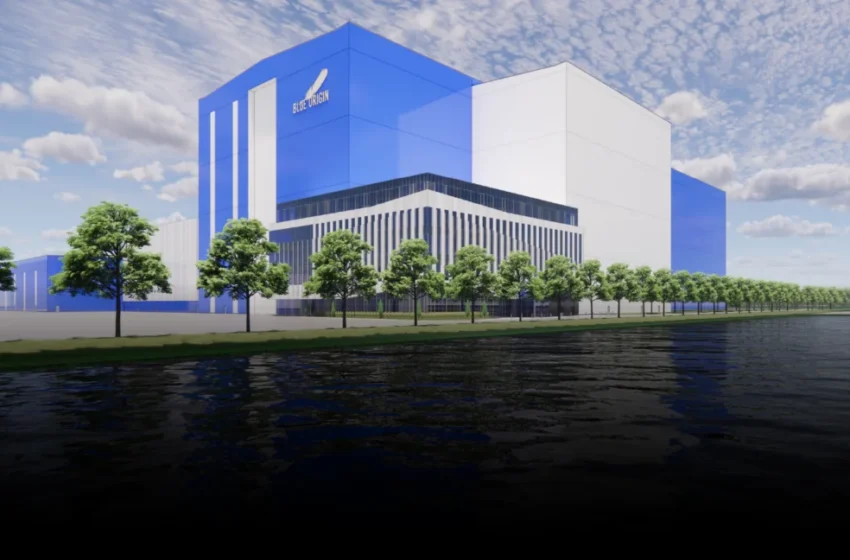
Blue Origin’s massive expansion of its New Glenn rocket launch and manufacturing facilities in Florida directly signals its intent to aggressively challenge SpaceX’s market dominance, promising significant increases in US space access and potentially driving down launch costs for American commercial and government customers. This strategic move aims to enable over 100 annual launches, fundamentally reshaping the competitive landscape for heavy-lift vehicles.
The company announced plans to add two launch pads at Cape Canaveral, bringing its total to four, alongside procuring two additional landing ships, which will expand its recovery fleet to three vessels including the existing Jacklyn. Blue Origin is also investing heavily in a new manufacturing plant designed to produce up to 150 upper stages annually for a larger variant of the New Glenn rocket. Furthermore, a new customer integration facility, developed in conjunction with the US Space Force, will feature four payload bays to simultaneously process multiple missions, reinforcing the national strategic importance of this expansion.
Why is Blue Origin Ramping Up New Glenn Capacity?
This substantial investment by Blue Origin reflects the soaring demand for reliable, cost-effective launch services across the US market. The proliferation of satellite constellations, ambitious lunar exploration programs, and critical national security payloads are all fueling an unprecedented need for increased access to space. Blue Origin’s aggressive scaling of New Glenn capacity aims to provide a robust, competitive alternative in the crucial heavy-lift segment of the US launch market.
For American enterprises and government agencies, the expansion promises more options and greater resilience in space access. Relying on a single dominant provider carries inherent risks, and Blue Origin’s move positions it as a formidable second major player capable of meeting diverse and growing US launch requirements.
The Infrastructure Behind the New Glenn Surge
Blue Origin’s announced infrastructure enhancements are designed to support an ambitious flight cadence, transforming its Florida operations into a high-volume launch hub. The addition of two launch pads means the company will eventually operate four separate pads, enabling more frequent and flexible launch windows.
The new manufacturing facility’s ability to produce up to 150 upper stages each year highlights Blue Origin’s commitment to high launch rates, ensuring a steady supply of flight-ready hardware. This capacity is critical for sustaining an annual launch goal exceeding 100 rockets.
To support its reusable first-stage strategy, Blue Origin will increase its landing ship fleet from one to three, significantly improving recovery operations and reducing turnaround times between launches. Faster reusability is key to driving down overall launch costs, a benefit that will ultimately accrue to US customers.
The customer integration facility, built with the US Space Force, is a strategic asset. Its four payload bays will allow simultaneous processing of multiple sensitive missions, underscoring the company’s commitment to national security launches and ensuring critical US assets can reach orbit efficiently.
| Infrastructure Aspect | Current/Planned (Source) | Future Capacity Goal (Source) | Implication |
|---|---|---|---|
| Launch Pads | 2 (under construction) | 4 total | Significantly increased launch frequency and flexibility |
| Landing Ships | 1 (Jacklyn) | 3 total | Faster first-stage reusability and operational efficiency |
| Upper Stage Manufacturing | N/A | Up to 150 per year | Enables high flight rates and rapid mission support |
| Customer Integration Facility | N/A | 4 payload bays | Simultaneous processing of multiple commercial/government missions |
New Glenn vs. The Competition: What Does This Mean for the US Launch Market?
This expansion positions New Glenn as a direct and serious challenger to the current leaders in the US heavy-lift launch market, particularly SpaceX’s Falcon 9 and Falcon Heavy. New Glenn is designed as a reusable heavy-lift rocket, capable of delivering substantial payloads to various orbits, mirroring the capabilities that have made SpaceX so successful. This increased competition is poised to generate significant benefits for US consumers.
Heightened competition could lead to reduced launch costs, as providers vie for lucrative government and commercial contracts. This cost efficiency is crucial for the ongoing deployment of large satellite constellations, scientific exploration initiatives, and bolstering US strategic capabilities in space. Moreover, having multiple robust domestic launch options enhances national security by ensuring diversified access to space, mitigating risks associated with single points of failure.
Greater Access to Space: An American Advantage
For American innovation, Blue Origin’s increased capacity means more frequent and accessible pathways to orbit. US businesses, researchers, and government agencies will find it easier and potentially more affordable to deploy their payloads, fostering growth across a wide spectrum of space-related industries. This investment directly contributes to maintaining and advancing American leadership in the global space economy.
A strong domestic launch industry is a cornerstone of national sovereignty and technological advancement. By dramatically increasing its launch and manufacturing capabilities, Blue Origin is not just growing its business; it’s fortifying the US’s strategic position in an increasingly competitive cosmic arena, ensuring critical infrastructure and scientific endeavors have reliable launch vehicles made and operated on American soil.
Key Takeaways
- Blue Origin’s major New Glenn expansion is a clear move to capture significant market share in the US heavy-lift launch sector.
- The company aims to achieve over 100 annual launches, significantly boosting domestic space access.
- Increased competition, particularly with SpaceX, is expected to drive down launch costs for American customers.
- Strategic partnerships, like the one with the US Space Force, underscore the national importance of a diversified launch industry.
What is the significance of Blue Origin’s New Glenn expansion?
The expansion signals Blue Origin’s intent to become a major, high-volume player in the US heavy-lift launch market, directly challenging existing dominance and aiming to provide more options and potentially lower costs for American commercial and government space missions.
How many New Glenn rockets does Blue Origin aim to launch annually?
Blue Origin has stated an ambitious goal to eventually fly more than 100 rockets a year from its expanded Florida launch facilities, a significant increase in projected launch cadence.
What new infrastructure is Blue Origin building for New Glenn?
The company is adding two launch pads (for a total of four), procuring two additional landing ships (for a total of three), building a manufacturing facility for up to 150 upper stages annually, and constructing a customer integration facility with four payload bays in partnership with the US Space Force.
