
NASA’s Call for Commercial Hubble Rescue Signals a New Era for US Space Infrastructure
- Government & Policy
Arjun Vedanta
- 0
- 9 minutes read
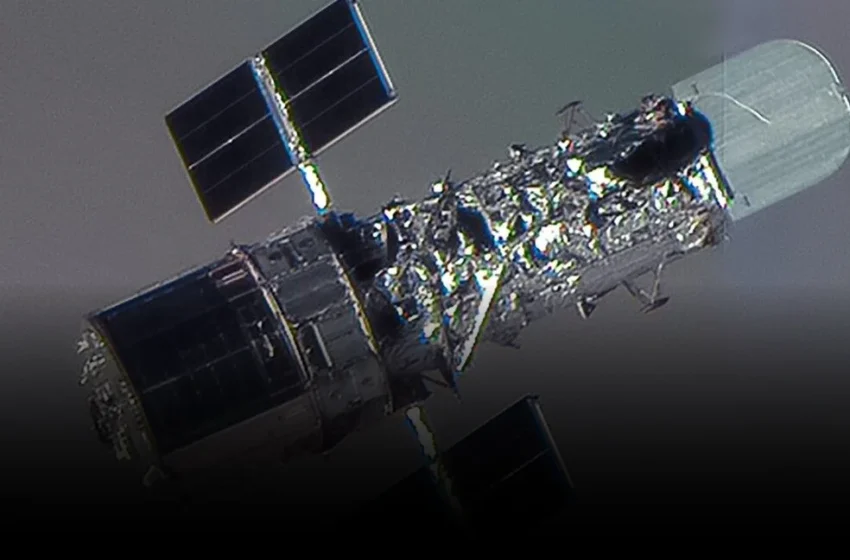
NASA’s recent Request For Information (RFI) seeking commercial solutions to extend the Hubble Space Telescope’s life isn’t merely about saving a beloved observatory; it represents a pivotal strategic shift for the US in sustaining its invaluable space infrastructure.
This initiative signals a growing reliance on the private sector for maintaining critical national assets, potentially unlocking vast new markets for American space companies and setting a precedent for future missions. For decades, the Space Shuttle program handled such complex orbital servicing, but its retirement in 2011 left a void. Now, as Hubble steadily descends towards an eventual deorbit in the early-to-mid 2030s, the US space agency is formally asking private industry to step up, reflecting a profound evolution in how high-value scientific instruments will be preserved.
Why Commercial Space Solutions for Hubble Matter Now
The Hubble Space Telescope, a collaboration between NASA and the European Space Agency, has been an unparalleled eye on the cosmos for 36 years, revolutionizing astrophysics and capturing iconic images from distant galaxies. However, like any aging infrastructure, it requires maintenance to continue its mission. Its last reboost was in 2002 by the Space Shuttle Columbia, and the final servicing mission in 2009 did not raise its orbit.
Now, with no government-owned vehicle capable of reaching Hubble, NASA issued an RFI on Thursday, November 2, asking commercial companies for their current and near-term capabilities. The agency specifically seeks ideas for reboosting Hubble to an altitude of at least 373 miles (600 km), enhancing its performance through servicing, or guiding it to a controlled reentry. Responses are due November 30.
This isn’t just about extending Hubble’s operational life; it’s a critical test case for a new paradigm in space asset management. The shift from exclusive government operations to commercial partnerships reflects the maturity and capability of the burgeoning American private space sector, often referred to as the "New Space" economy. Companies like SpaceX, Northrop Grumman, and others have already demonstrated advanced capabilities in launch, resupply, and increasingly, on-orbit operations.
The Technical Hurdles and Commercial Opportunities for Orbital Servicing
Rescuing or responsibly disposing of a spacecraft like Hubble presents significant engineering challenges, yet also immense commercial opportunities. The RFI outlines three primary approaches, each with its own complexities and market potential:
| Approach | Description | Key Challenges | Commercial Opportunity |
|---|---|---|---|
| Reboosting Orbit | Raising Hubble to a higher, more stable orbit (at least 373 miles/600 km) to extend its operational life. | Rendezvous and proximity operations (RPO), gentle capture, precise thrust application without damaging the telescope. | Foundation for orbital transfer vehicles; lower complexity, high demand for life extension services. |
| On-Orbit Servicing | Performing repairs, upgrades, or refueling to enhance Hubble’s performance. | Advanced robotics, autonomous docking, specialized tools, managing power constraints, thermal considerations. | High-value market for complex satellite maintenance, component replacement, and upgrade platforms. |
| Controlled Disposal | Guiding Hubble to a safe, controlled reentry into Earth’s atmosphere, preventing random debris. | Precise capture, deorbiting burn accuracy, ensuring atmospheric breakup over unpopulated areas. | Growing market for active debris removal and responsible end-of-life management for large satellites. |
Rendezvous and Proximity Operations (RPO)
A fundamental requirement for any of these solutions is RPO, the precise maneuvering of one spacecraft relative to another in orbit. "RPO is the backbone of future in-space logistics, enabling everything from satellite servicing to orbital assembly," explains a hypothetical industry expert. American companies are making significant strides in this area, with firms developing robotic arms, autonomous navigation systems, and advanced sensors necessary for safely approaching and interacting with non-cooperative targets like the 36-year-old Hubble.
The capabilities demonstrated by companies like Maxar Technologies, with its robotic arms used on the International Space Station, or Astroscale, which is developing debris removal and satellite life extension technologies, showcase the domestic talent pool capable of tackling these challenges. These firms, alongside new entrants, stand to benefit from the investment and experience gained through a Hubble mission.
Beyond Hubble: Implications for Future US Space Assets
The precedent set by a successful commercial intervention for Hubble extends far beyond a single telescope. It signals a future where critical government space assets, from Earth observation satellites for NOAA to strategic platforms for the Department of Defense, might be sustained and upgraded through private contracts rather than exclusive governmental missions.
This approach offers several compelling benefits. Firstly, it provides a cost-effective alternative to building entirely new observatories or satellites every few decades, maximizing the return on investment for existing, high-performing hardware. Secondly, it fosters innovation within the US private sector, encouraging the development of advanced robotic, propulsion, and navigation technologies that have dual-use applications for both scientific and national security missions. Finally, it directly addresses the growing concern of space debris. Controlled disposal, if chosen, would prevent a large, defunct telescope from becoming a long-term hazard to operational spacecraft.
What Does This Mean for the American Space Economy?
NASA’s RFI is a clear signal that the agency, and potentially other government entities, views the commercial space industry as a vital partner in maintaining national capabilities. This not only translates into potential contracts for current players but also stimulates further investment in research and development within the US.
- Job Creation: Developing and executing complex orbital missions requires highly skilled engineers, technicians, and scientists, creating high-paying jobs across the country.
- Technological Leadership: Success in advanced orbital servicing positions the US as a global leader in critical space technologies, offering a competitive edge in the international space market.
- Diversified Revenue Streams: For commercial companies, adding robust on-orbit servicing and disposal to their portfolios diversifies their revenue beyond launch and satellite manufacturing.
- Strategic Resilience: A vibrant commercial ecosystem for space services enhances US resilience in space, allowing for quicker responses to evolving needs and challenges without solely relying on government-developed solutions.
The lessons learned from a potential Hubble rescue mission, whether it’s a simple reboost or a more elaborate servicing effort, will undoubtedly inform future missions and collaborations, further cementing the role of private enterprise in the American space endeavor.
Conclusion
NASA’s search for commercial partners to address the Hubble Space Telescope’s looming end-of-life isn’t just a technical challenge; it’s a strategic embrace of the burgeoning private space sector. This move underscores a significant evolution in how the US plans to manage its critical space infrastructure, shifting towards an integrated approach that harnesses the innovation and agility of commercial companies. For American tech professionals and enthusiasts, this moment represents a pivotal step in the "New Space" era, promising new capabilities, economic growth, and the continued legacy of scientific exploration.
Key Takeaways:
- NASA’s RFI signals a strategic pivot towards relying on commercial space for maintaining critical government assets.
- This initiative creates significant new market opportunities for US companies in orbital servicing, reboosting, and controlled disposal.
- A successful mission for Hubble would set a powerful precedent for extending the life and utility of future US government satellites.
- It contributes to addressing space debris concerns through the potential for responsible end-of-life management.
Frequently Asked Questions (FAQ)
Why is NASA seeking commercial help for Hubble now?
NASA is seeking commercial assistance because the Space Shuttle, which previously performed Hubble servicing missions, was retired in 2011. Without a government-owned vehicle capable of reaching and servicing Hubble, NASA is turning to the advanced capabilities of the private sector to either extend its operational life or ensure a safe, controlled disposal.
What are the main challenges in servicing the Hubble Space Telescope?
The primary challenges include performing precise rendezvous and proximity operations (RPO) with an aging, uncooperative spacecraft, securely capturing and manipulating it without damage, and executing complex tasks like reboosting its orbit or performing repairs. Hubble was not originally designed for autonomous docking by commercial vehicles, adding layers of complexity.
How could this impact the US commercial space industry?
This initiative could significantly boost the US commercial space industry by opening new markets for orbital servicing, debris removal, and in-space logistics. It provides a tangible opportunity for companies to demonstrate advanced capabilities, secure valuable government contracts, and drive innovation, ultimately strengthening America’s leadership in the global space economy.
