
Austin’s Rapid Temperature Plunge: A Testbed for US Weather Tech and Smart Resilience
Arjun Vedanta
- 0
- 9 minutes read
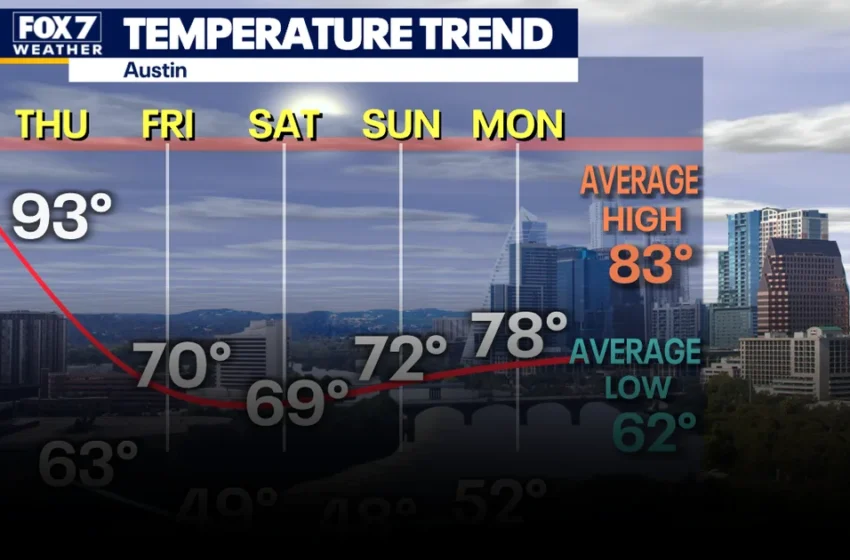
Austin, Texas, is bracing for a dramatic drop in temperatures, shifting from the 90s to the 40s Fahrenheit in less than 24 hours starting October 16, 2026, a sudden shift that underscores the growing critical role of advanced weather technology and smart home systems in enabling preparedness and ensuring safety for American residents amidst increasing climate variability.
This imminent ‘temperature whiplash’ in the Texas capital is more than just a local news item; it highlights a broader national trend where US cities face increasingly volatile weather patterns. For tech-savvy Americans, it’s a stark reminder of how essential real-time forecasting, sophisticated data analytics, and connected home technologies have become in navigating immediate risks, from wildfire danger to grid stability, ultimately enhancing urban resilience across the country.
The Tech Behind the Forecast: More Than Just a Weatherman
Modern meteorology has transformed weather prediction from an art to a data-intensive science, a shift critically important for events like Austin’s impending cold front. The days of simply glancing at a barometer are long gone. Today, meteorologists like FOX 7 Austin’s Zack Shields leverage an intricate network of satellites, ground-based radar, and sophisticated atmospheric models that process terabytes of data.
These systems employ advanced algorithms, often incorporating machine learning, to predict atmospheric pressure, wind speeds, and precipitation with remarkable precision. This allows for detailed timelines, such as the prediction of scattered showers from midnight to sunrise on October 16, followed by strong northerly winds gusting 30 to 40 miles per hour (48 to 64 km/h), as detailed by FOX 7 Austin Weather. The accuracy of these digital forecasts provides invaluable lead time for residents and emergency services alike.
Beyond professional meteorology, consumer-facing applications are central to individual preparedness. The free FOX 7 WAPP, for instance, exemplifies how local stations integrate complex data into user-friendly interfaces, offering radar, hourly forecasts, and 7-day outlooks. These apps deliver crucial weather alerts directly to smartphones, empowering users to make informed decisions about everything from dressing for the day to avoiding outdoor burning due to extreme fire risk, a critical concern given the low humidity accompanying Austin’s cold front.
Smart Homes and Preparedness: Riding the Temperature Rollercoaster
The rapid shift from summer-like heat to autumnal chill in Austin serves as a practical stress test for smart home technologies designed to optimize comfort and safety. For many American homeowners, intelligent systems are no longer just conveniences but vital tools for weather adaptation.
Smart thermostats from companies like Nest and Ecobee can proactively adjust heating and cooling schedules based on real-time weather feeds, minimizing energy waste and maximizing comfort during sudden temperature swings. As Austin’s lows drop into the 40s (around 4-9 degrees Celsius), these devices can begin pre-heating homes before residents even notice the chill, utilizing predictive algorithms to optimize energy use.
Moreover, smart home platforms can integrate with other IoT devices to enhance safety. Given the elevated fire danger from high to extreme risk, smart smoke detectors and carbon monoxide alarms, often connected to a central hub, can provide immediate alerts. Some systems even offer remote monitoring, allowing homeowners to check on their properties and adjust settings while away, a critical feature when advisories, such as avoiding outdoor burning or staying off choppy lakes, are issued. This integration creates a seamless layer of digital defense against sudden environmental shifts.
| Feature | Traditional Home Prep | Tech-Enhanced Home Prep |
|---|---|---|
| Temperature Control | Manual thermostat adjustments, window opening/closing | Smart thermostat (e.g., Nest, Ecobee) adjusts automatically based on forecast and occupancy |
| Weather Alerts | Local news broadcasts, siren alerts | Push notifications via weather apps (e.g., FOX 7 WAPP), smart speaker announcements |
| Fire Safety | Standalone smoke detectors, manual outdoor burning checks | Smart smoke/CO detectors linked to home security, wildfire risk alerts via apps |
| Energy Optimization | Trial-and-error, high utility bills | Predictive algorithms reduce heating/cooling waste, real-time energy monitoring |
Economic Implications and Energy Grids in a Volatile Climate
Beyond individual homes, such abrupt weather changes carry significant economic implications and stress on critical infrastructure, particularly energy grids. In Texas, the state’s independent power grid operator, ERCOT, is no stranger to managing extreme weather variability, having faced significant challenges during past winter storms and summer heatwaves.
A sudden drop from 90-degree Fahrenheit (32 degrees Celsius) highs to 40-degree (4 degrees Celsius) lows within a single day creates a massive demand spike as residents switch from air conditioning to heating. This rapid shift can strain generation capacity and transmission lines, potentially leading to increased electricity prices or, in extreme cases, localized outages. Grid modernization efforts, including smart grid technologies and advanced demand response systems, are crucial for mitigating these impacts, allowing utilities to better predict and manage load fluctuations.
Businesses also bear the brunt of weather volatility. Outdoor recreation companies, construction sites, and even local retail will feel the immediate impact of high winds and chilling temperatures. For example, wind gusts of 30 to 40 mph (48 to 64 km/h) make outdoor work hazardous and recreational activities on lakes dangerous, directly affecting economic output. Technology aids here too, with real-time weather analytics informing operational decisions, supply chain adjustments, and employee safety protocols.
Navigating Austin’s New Climate Reality with Tech
Austin’s rapid weather shifts are not isolated incidents but reflect a broader trend of increased climate variability impacting communities across the United States. Cities are increasingly relying on technology to build resilience and adapt to these new realities. From advanced atmospheric modeling to distributed IoT sensor networks measuring urban heat islands and air quality, tech provides the data necessary for proactive urban planning and emergency response.
Public agencies are partnering with private tech firms to develop sophisticated early warning systems for phenomena like flash floods, severe storms, and wildfire conditions—all of which are exacerbated by climate shifts. These systems don’t just alert; they offer predictive insights that can inform resource deployment, evacuation routes, and public safety campaigns. The imperative for cities like Austin is to not only predict these events but to integrate technology into every facet of civic preparedness, from infrastructure design to citizen engagement.
Key Takeaways for US Readers
- Tech-Driven Preparedness: Advanced meteorological tech and smart home systems are crucial for safety and comfort during rapid weather shifts.
- Grid Resilience: Sudden temperature swings strain energy grids, highlighting the need for smart grid investments and demand-side management.
- Economic Adaptation: Businesses must leverage real-time weather data to adjust operations and ensure safety in volatile conditions.
- Urban Resilience: Cities are becoming testbeds for integrated tech solutions to manage climate variability and protect citizens.
- Personal Responsibility: Utilizing official weather apps and smart home features is essential for individual and family safety.
What makes Austin’s weather shift significant for US tech professionals?
Austin’s rapid temperature plunge highlights the practical application and stress-testing of weather forecasting technologies, smart home systems, and energy grid resilience in a real-world scenario. For tech professionals, it showcases the immediate impact and critical need for innovation in data analytics, IoT, and AI-driven predictive modeling to manage climate variability across American cities.
How do smart home devices help during sudden weather changes like Austin’s?
Smart home devices, particularly smart thermostats, can automatically adjust heating or cooling based on real-time weather data, optimizing energy use and maintaining comfort. Additionally, connected sensors and alarms can provide immediate alerts for critical issues like extreme fire danger or unexpected atmospheric shifts, enhancing overall safety and preparedness for homeowners.
What are the implications for the energy grid when temperatures drop so quickly?
A rapid temperature drop, such as Austin’s from 90s to 40s, creates a sudden surge in demand for heating, placing significant strain on the energy grid’s generation and transmission infrastructure. This can lead to increased energy costs or, in severe cases, localized power outages, emphasizing the need for robust grid modernization and demand response technologies like those managed by ERCOT in Texas.
