
Neverwinter Nights’ Enduring Community: How Modding Tools Forged a Lasting Legacy
Arjun Vedanta
- 0
- 8 minutes read
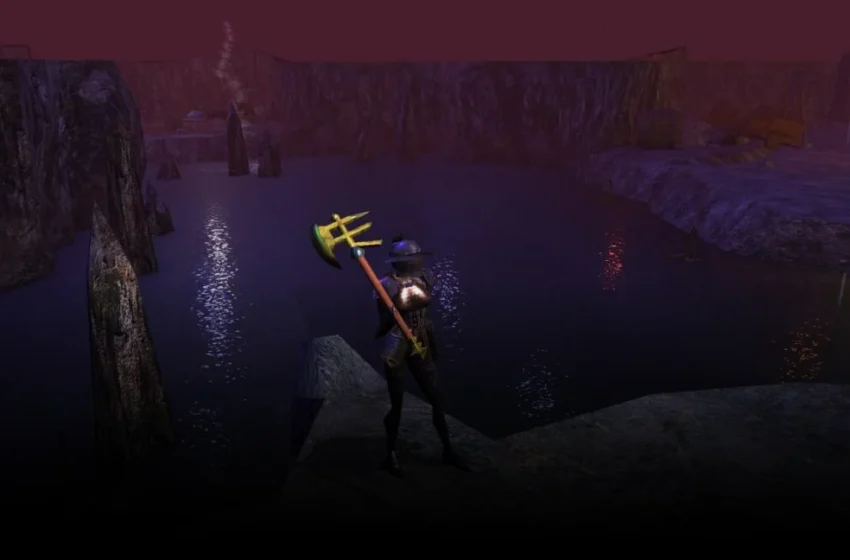
Neverwinter Nights defies typical video game lifecycles with an active, thriving community more than two decades after its launch, primarily due to its groundbreaking toolkit for user-generated content (UGC). This pioneering approach empowered players to create their own adventures, fostering a unique ecosystem that continues to engage American tech enthusiasts by prioritizing creative freedom over static content.
While BioWare is celebrated for its narrative-driven masterpieces like Baldur’s Gate, Mass Effect, and Dragon Age, Neverwinter Nights carved out a distinct legacy. Launched in 2002, it quickly garnered critical acclaim and sold well, yet it often sits slightly outside the mainstream canon of its more linear brethren. For many American players, especially those with a penchant for digital craftsmanship and community, NWN offered something fundamentally different: a platform for endless, player-driven storytelling that cemented its status as a foundational title in the evolution of modding culture.
The Core of Longevity: Empowering Player Creativity with the Aurora Toolset
The secret to Neverwinter Nights’ remarkable staying power lies less in its pre-packaged campaign and more in the sophisticated development tools BioWare included with the game. At its heart was the Aurora Toolset, a powerful and accessible editor that allowed players to build custom modules, maps, scripts, and even entire campaigns with relative ease. This wasn’t merely a level editor; it was a near-complete game development kit.
Coupled with the Aurora Toolset was the revolutionary Dungeon Master Client, which enabled one player to act as a live Dungeon Master (DM) for others in real-time online sessions. This replicated the social, improvisational magic of tabletop role-playing games like Dungeons & Dragons, allowing DMs to dynamically alter encounters, introduce new characters, or narrate on the fly. This level of player agency and real-time interaction was virtually unheard of in commercial video games at the time, offering an unparalleled interactive experience.
These tools fundamentally shifted the paradigm from players consuming content to players actively creating and curating it. While other games offered modding support, NWN integrated creation as a core feature from day one, fostering a vibrant scene where content flowed directly from the community, for the community. For a US audience steeped in digital innovation, this focus on DIY creativity resonated deeply, turning players into developers and storytellers.
A Thriving Ecosystem of User-Generated Content and Persistent Worlds
Two decades on, the **Neverwinter Nights community** continues to thrive, sustained by a vast and ever-growing library of user-generated content. Thousands of fan-made modules, ranging from short, focused quests to sprawling, multi-part sagas, are freely available. These modules often introduce entirely new stories, characters, and gameplay mechanics, extending the game’s lifespan far beyond its original scope.
The appeal for American tech professionals often stems from this creative sandbox. NWN became a platform for hobbyist developers to hone scripting skills, practice narrative design, and engage in collaborative projects. Persistent worlds, custom servers running 24/7 with their own rulesets, lore, and player-driven economies, became digital hubs. These virtual societies offered an immersive, ongoing role-playing experience unlike anything else, attracting a dedicated player base seeking deep social interaction and continuous adventure.
This ecosystem wasn’t just about new adventures; it also included extensive custom content like character models, textures, animations, and sound effects. Players could overhaul almost every aspect of the game’s presentation and mechanics, ensuring a constantly evolving experience. This robust modding scene demonstrates that strong community engagement, facilitated by powerful tools, can outlast graphical fidelity and initial release content.
Beyond Graphics: Why NWN Still Resonates Today
While Neverwinter Nights‘ graphics, based on an engine developed in the early 2000s, are undoubtedly dated by modern standards, its enduring appeal proves that gameplay depth, narrative flexibility, and community interaction often trump cutting-edge visuals. For its dedicated player base, the technical limitations are a small price to pay for the unparalleled freedom and content diversity.
The community itself has played a crucial role in modernizing the experience. Dedicated players and modders have developed unofficial patches, high-resolution texture packs, and enhanced user interfaces, breathing new life into the game’s visuals and functionality. This continuous community-driven refinement exemplifies the power of open platforms where users can collectively improve and maintain a product, ensuring its long-term viability.
This longevity parallels the success of titles like Minecraft or platforms like Roblox, where user-generated content is not merely an add-on but the primary engine of engagement. For many players, particularly those valuing creative expression and deep narrative, the intrinsic value of player-driven content far outweighs the superficial sheen of newer, but potentially more restrictive, games. The focus keyword, Neverwinter Nights community, is a testament to this collaborative spirit.
The Lasting Influence on Modern Gaming
Neverwinter Nights‘ forward-thinking approach to user-generated content and modding tools set a significant precedent for the gaming industry. It demonstrated that empowering players to create and share their own content could drastically extend a game’s lifespan and cultivate an intensely loyal player base. This model has profoundly influenced subsequent game development and community strategies.
Many modern titles now actively embrace or even build their core around UGC. Games like Skyrim, with its robust modding scene, or engines like Unity and Unreal, which provide accessible tools for aspiring developers, echo NWN’s philosophy. Platforms like Steam Workshop further streamline the distribution and installation of user-created content, making it easier than ever for players to engage with and benefit from community contributions.
The economic implications are also significant. While BioWare itself didn’t directly monetize player-created modules in NWN, the game proved that a strong UGC ecosystem can drive sustained sales of the base game, fostering brand loyalty and creating a powerful organic marketing engine. This foresight into the power of distributed content creation makes NWN a fascinating case study for any tech analyst examining digital platforms and community engagement strategies.
Key Takeaways
- The **Neverwinter Nights community** thrives thanks to its pioneering user-generated content (UGC) tools, including the Aurora Toolset and Dungeon Master Client.
- These tools offered unparalleled creative freedom, allowing players to build custom modules, campaigns, and persistent worlds.
- The game’s longevity proves that deep player agency and a vibrant modding scene can transcend aging graphics and extend a title’s relevance for decades.
- NWN’s model of empowering player-creators foreshadowed the success of modern UGC platforms and heavily moddable games.
- For American tech enthusiasts, NWN represents a powerful example of community-driven innovation and lasting digital craftsmanship.
FAQ
What is Neverwinter Nights?
Neverwinter Nights is a classic computer role-playing game (RPG) developed by BioWare and released in 2002. It’s set in the Dungeons & Dragons Forgotten Realms universe, known uniquely for its powerful toolset that allows players to create and share their own adventures.
How did Neverwinter Nights foster such a strong community?
The game fostered its strong community by providing players with the Aurora Toolset for content creation and a Dungeon Master Client for real-time multiplayer storytelling. These tools empowered players to become creators, leading to thousands of user-made modules and persistent online worlds where players could engage in ongoing, collaborative role-playing experiences.
Is Neverwinter Nights still playable today?
Yes, Neverwinter Nights is still actively played today. Beamdog released an Enhanced Edition in 2018, which added modern compatibility, visual improvements, and new content, ensuring the game remains accessible and enjoyable for new and veteran players on contemporary operating systems.
