
Beyond Perjury: The Global Erosion of Institutional Trust in the Age of Disinformation
- Government & Policy
Arjun Vedanta
- 0
- 5 minutes read
The Anatomy of a Political Lie
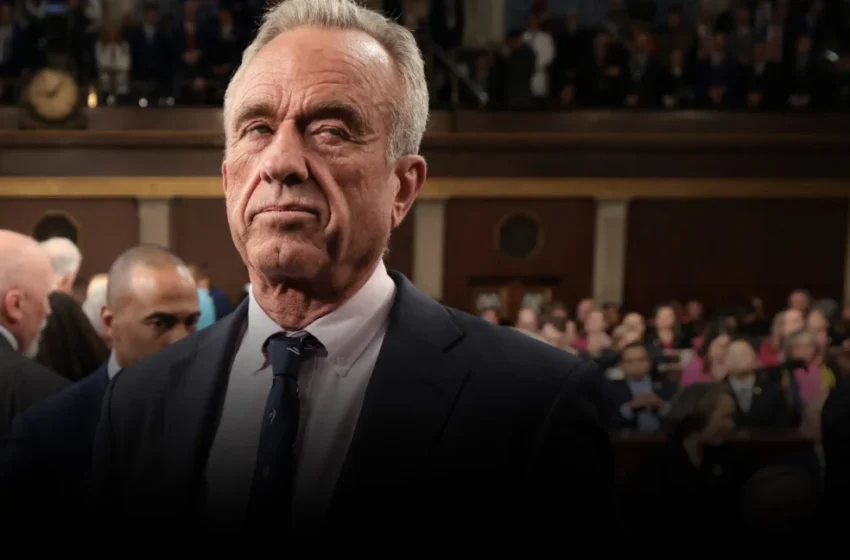
The demand for a criminal probe into Robert F. Kennedy Jr.’s testimony before the Senate is not merely a legalistic blip; it rips open the deeper wound of political accountability in an era where verifiable truth has become a negotiable commodity. When Sen. Ron Wyden (D-Ore.) states, via social media, that there is “Proof we got RFK lying on the record during his confirmation hearing (a crime)”, the immediate focus is on perjury. But the structural implications extend far beyond the specifics of a single official’s alleged misdeeds.
For too long, the US political discourse has accepted a certain elasticity with facts, particularly when public figures are vying for or defending influence. Yet, the current accusations against Kennedy Jr. regarding his anti-vaccine positions—which Sen. Edward J. Markey (D-Mass.) terms “a pattern, not a slip”—represent a dangerous escalation. This isn’t just about policy disagreement; it’s about a fundamental breach of trust in the very mechanisms designed to vet candidates for public service. The charge that his platform is “built on lies and grifts that leave a trail of dead children in their wake” is not hyperbole; it is a direct consequence articulated by those closest to the legislative process.
Institutional Integrity Under Siege
The original article’s focus on the immediate calls for Kennedy’s ouster or prosecution is understandable, but it misses a crucial, more insidious consequence. This incident highlights the escalating ease with which public figures, once vetted for high office, can leverage institutional platforms to disseminate dangerous misinformation. My years covering technology’s impact from Geneva to Singapore reveal that this isn’t just a political problem, nor is it uniquely American. The erosion of trust in governance itself, driven by weaponized doubt, is a global phenomenon, amplified and accelerated by digital information channels.
What US-centric reporting often overlooks is the global feedback loop. When a figure like RFK Jr., a scion of a prominent political family, allegedly abuses the Senate confirmation process to obfuscate his true agenda, it sends a ripple effect across borders. Autocratic regimes watch. Populist movements gain ammunition. The idea that foundational truths—from public health consensus to electoral integrity—are negotiable assets becomes further entrenched. It is a slow, systemic poisoning of the informational well that mirrors, in its methodology, the sophisticated disinformation campaigns we’ve observed targeting everything from elections to financial markets.
The incentive here is clear: for RFK Jr., or any figure deploying similar tactics, the goal is often to legitimise fringe ideologies by injecting them into mainstream political discourse. By seeking or holding high office, even amidst controversy, such individuals gain a veneer of credibility that helps them bypass the traditional fact-checking filters of media and scientific communities. The call for a criminal investigation, while legally necessary, almost feels reactive, a scrambling effort to secure the stable door after the horses have bolted. The damage to public perception of institutional integrity is already done.
The Global Echo of Domestic Disinformation
Consider the contrast: while major technology platforms like X (formerly Twitter) and Meta grapple, often imperfectly, with content moderation and misinformation at scale, the mechanisms for accountability within government often appear glacial by comparison. The calls for the Department of Justice to act on alleged perjury are important, but they are a legal remedy, not an immediate bulwark against the ongoing spread of public health misinformation—or any other falsehood—that finds a voice through official channels. The perceived slowness and reactivity of traditional government accountability systems stand in stark contrast to the real-time, global acceleration of disinformation, creating a dangerous vulnerability for democratic institutions worldwide.
Governments, unlike private tech companies, derive their legitimacy from the implicit trust of their citizens. When that trust is undermined by figures operating within those very structures, the societal fabric begins to fray. We’re witnessing a normalisation of falsehoods in the pursuit of power, where even the solemnity of Senate testimony can become another stage for performance and deception. The technology ecosystem, with its challenges in platform governance and content provenance, knows this dynamic intimately. But in government, the stakes are existential: it’s not just about clicks or ad revenue, but about the very foundations of public policy and collective well-being.
Ultimately, the RFK Jr. controversy is more than just a scandal; it is a critical symptom of a deeper malaise. It underscores the urgent need for robust, proactive mechanisms—beyond mere legal recourse—to safeguard the integrity of public office and the information environment. Without them, the global spread of dangerous narratives, legitimised by figures in positions of authority, will continue to undermine both scientific consensus and the very idea of accountable governance.
