
US Space Academy: A Muddled Strategy for Human Capital in Orbit
- Space
Arjun Vedanta
- 0
- 6 minutes read
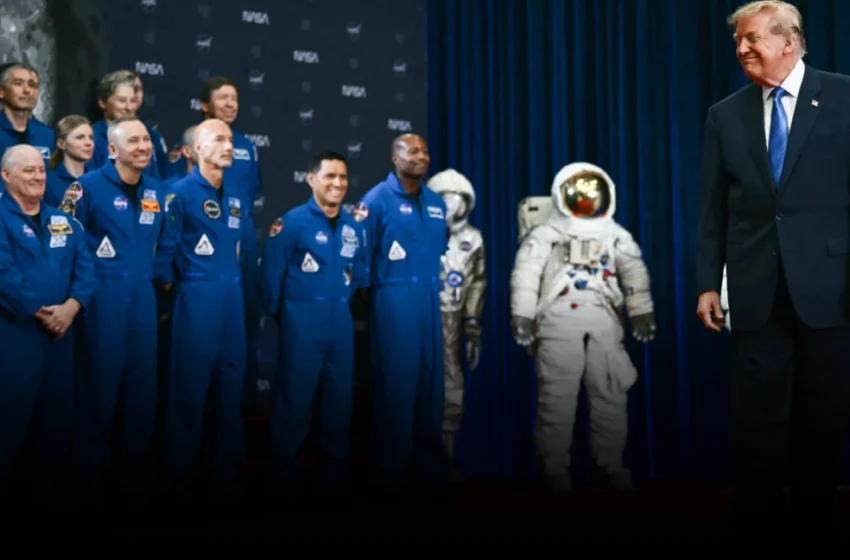
President Trump’s recent executive order, aimed at establishing a commission to create a “US Space Academy” under NASA’s jurisdiction, presents a fascinating case study in policy announcement versus strategic clarity. While framed as a forward-looking initiative to educate a new generation of space professionals, the proposal immediately collides with the concurrent, more militarized expansion of US space capabilities: the Space Force. This isn’t merely about another academy; it’s about a deeply ambiguous vision for human capital in a domain increasingly defined by both scientific endeavor and geopolitical rivalry, a tension largely unaddressed in the initial fanfare.
The Overlooked Overlap in Space Personnel Strategy
The White House’s declared intention to found a “first national space academy” might sound visionary on the surface, but its very premise raises more questions than it answers about America’s broader space personnel strategy. President Trump articulated a need to “educate and train an entire generation of skilled service members, engineers, and civil operators.” However, the critical caveat that this proposed US Space Academy is explicitly “not intended [to] be a traditional service academy” like the Air Force Academy, yet will still supply “service members,” creates an immediate, gaping void in its mandate. Who, precisely, are these service members if not military, and why would NASA oversee their training outside traditional military channels?
This ambiguity suggests a potential for significant overlap and redundancy with existing and rapidly evolving structures. The US Space Force, established in 2019, is actively defining its recruitment, training, and operational doctrines. Its personnel, known as Guardians, are already being integrated into a distinct service culture, requiring specialized technical and strategic education. Furthermore, the Air Force Academy and other service academies, alongside ROTC programs and civilian universities, have long been pipelines for military space expertise, continually adapting their curricula to meet evolving demands in areas like orbital mechanics, satellite operations, and cybersecurity. Introducing a separate, civilian-led academy for “service members” without clear delineation risks fragmenting expertise and creating inefficient parallel systems, rather than a cohesive national strategy.
The actual utility of establishing a wholly new, civilian space academy, distinct from existing military structures yet parallel to military-driven space expansion, remains dubious. It implies a perceived deficiency in current talent pipelines that has not been clearly articulated, or perhaps, a fundamental misunderstanding of the integration required for modern space operations. Space operations, whether civilian science or military defense, demand highly specialized and often cross-disciplinary skills that existing institutions are already striving to provide and evolve.
NASA’s Shifting Role Amidst Militarization
Placing the proposed US Space Academy under the “jurisdiction of NASA” adds another layer of complexity to an already muddled picture. Historically, NASA has been the vanguard of civilian space exploration, driving scientific research, human spaceflight for discovery, and the development of technologies for peaceful purposes. Its educational outreach has focused on inspiring future scientists and engineers, often in partnership with universities and through programs like the Artemis program that aim for lunar and Martian exploration.
However, recent years have seen a noticeable shift in the US space ecosystem, with an increasing emphasis on commercial space ventures and, crucially, military strategic dominance. The creation of the Space Force explicitly carved out the military dimension of space, theoretically allowing NASA to maintain its scientific purity. Delegating the creation and oversight of an academy that will train “service members” to NASA blurs these lines considerably. It forces NASA into a quasi-military education role, potentially diverting resources and focus from its core scientific and exploratory missions. This move also raises questions about NASA’s suitability to train individuals for roles that, by definition, sound more aligned with national security and defense, even if they aren’t directly commissioned officers.
One might argue this represents a civil-military integration, but without a robust, explicit framework, it looks more like an administrative convenience. The incentive here, perhaps, is to leverage NASA’s universally recognized brand appeal and perceived educational expertise, lending an aura of scientific credibility to what might otherwise appear as a more overtly defense-oriented initiative. Yet, the long-term impact on NASA’s institutional identity and its capacity to execute its primary mission in an increasingly competitive global space race could be substantial, potentially diluting its focus on pure scientific inquiry in favor of a hybrid human capital development role.
Beyond the Headline: Incentives and Redundancy
Announcements like the “US Space Academy” often serve multiple purposes, only some of which are about the stated goal. In this instance, the immediate benefit of such an announcement lies less in its granular implementation details and more in its capacity to generate headlines and project an image of assertive leadership in space, particularly resonant with a specific political base. The rhetoric surrounding the announcement, framing it as a “big deal,” underscores its performative aspect.
From an international perspective, where nations like China and Russia are rapidly advancing their own space capabilities, and Europe is consolidating its Space Agency efforts, the United States’ strategy for human talent development appears fragmented. Other major space powers, recognizing the dual-use nature of space, typically integrate their civilian and military space personnel strategies more explicitly within established governmental and educational frameworks, rather than creating new, potentially duplicative entities. The call for a “new national academy” suggests a gap that existing educational institutions and the newly formed Space Force cannot fill, an assertion that lacks detailed substantiation.
Ultimately, a critical look beyond the initial announcement reveals a policy proposal that is long on aspiration but short on strategic coherence. The practical challenges of establishing a new federal academy—including funding, curriculum development, faculty recruitment, and accreditation—are immense. To embark on such an undertaking without clearly defining its relationship to the Space Force, existing military academies, and the extensive network of university aerospace programs means a likely future of bureaucratic entanglement and suboptimal resource allocation. The US doesn’t need another space-themed educational institution; it needs a streamlined, integrated human capital strategy that aligns its military, civilian, and commercial ambitions for the new space age.
