
Crows’ Blazing Fast Brains Offer New AI Blueprints for US Tech
- Artificial Intelligence
Arjun Vedanta
- 0
- 9 minutes read
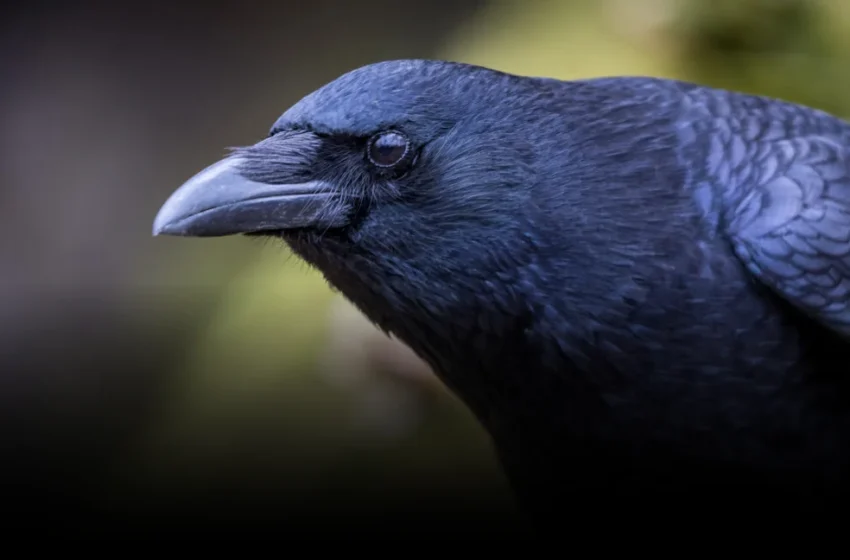
Beyond the Mammalian Blueprint: Crows Redefine AI Possibilities
Research indicates crows possess a remarkable ability to process visual information twice as fast as mammals, suggesting alternative neural architectures beyond the mammalian neocortex could fundamentally reshape US artificial intelligence development. This unexpected efficiency challenges existing assumptions about cognitive processing and offers a compelling new blueprint for building more agile and robust AI systems, particularly in machine vision and autonomous navigation.
For decades, understanding intelligence has largely centered on mammalian brains, particularly primates, informing much of our AI research. The discovery that avian brains, structured entirely differently, can outperform mammalian counterparts in processing speed opens a critical new frontier. This isn’t just a biological curiosity; it’s a potential catalyst for US researchers and tech companies seeking breakthroughs in AI efficiency, energy consumption, and real-time decision-making. The implications for areas from self-driving cars to advanced robotics are profound for American innovation.
Beyond the Neocortex: A Different Path to Processing Power
Much of what we understand about how a brain makes rapid decisions comes from studying primates engaged in tasks like the random-dot-motion task. In this scenario, a subject observes a cloud of flickering specks and must determine the direction of weak underlying motion. In the primate neocortex, neurons meticulously gather visual evidence over time. Their firing rates gradually climb until they cross a specific threshold, at which point the animal commits to a decision.
However, avian brains fundamentally diverge from this mammalian model. Crows, for example, do not possess a neocortex, the layered structure considered central to complex cognition in mammals. This architectural difference has long posed a significant neuroscientific puzzle. As neurobiologist Andreas Nieder of the University of Tübingen queried, “This was the big question… How [would] a differently organized avian brain encode decisions?” The answer, emerging from recent research, points to a highly efficient, non-neocortical mechanism that allows crows to process visual cues at an astonishing speed.
Instead of a neocortex, avian brains feature a structure called the pallium, particularly the nidopallium, which handles many functions analogous to the mammalian cerebral cortex. While the specific neural mechanisms enabling this accelerated processing are still under active investigation, the finding implies a distinct organization of neuronal circuits, potentially leveraging denser neural packing or more direct, optimized pathways for information flow. This allows them to achieve complex cognitive tasks, including tool use and problem-solving, with a brain structure optimized for rapid, actionable insights.
Why Avian Speed Matters for US AI Innovation
The efficiency of avian cognitive processing represents a tantalizing prospect for overcoming some of the most significant hurdles in contemporary artificial intelligence. Modern AI, particularly deep learning, demands immense computational resources and energy. Training large language models, for instance, can consume as much electricity as small towns, and deploying complex models on edge devices or autonomous systems often requires compromises on speed or capability due to power and processing constraints.
For US tech companies driving innovation in machine vision, the implications of “twice as fast” visual processing are immediate and substantial. Consider autonomous vehicles from Waymo or Tesla. Their ability to perceive and react to dynamic road conditions—detecting pedestrians, interpreting traffic signals, or identifying potential hazards—relies on incredibly rapid and accurate visual processing. A system inspired by avian efficiency could lead to self-driving cars that respond more quickly, consume less power, and operate more reliably in real-time, high-stakes environments.
Beyond transportation, applications extend to robotics (e.g., Boston Dynamics’ agile robots navigating complex terrain), drone technology for inspection and delivery, and advanced surveillance systems. Faster processing translates directly into more responsive, safer, and ultimately more effective AI deployments. For US defense agencies like DARPA, which invests heavily in next-generation AI, understanding these alternative biological computing paradigms offers a strategic advantage in developing robust, resilient autonomous systems. The drive for energy-efficient AI is paramount for both environmental sustainability and practical deployment in power-constrained scenarios, from mobile devices to deep-space probes.
From Feathered Friends to Future Algorithms: Engineering New AI Architectures
Translating the principles of avian brain processing into artificial intelligence is not about directly copying neurons but rather extracting fundamental architectural and computational insights. This field, often termed bio-inspired AI or neuromorphic computing, seeks to design algorithms and hardware that mimic the efficiency and adaptability of biological systems, but with the scalability and precision of digital computation.
One key area of exploration might be new forms of neural network design. If avian brains achieve speed through different connectivity patterns, perhaps sparse yet highly efficient networks, or through specialized “routing” mechanisms for information, these could inform novel neural network architectures. US academic powerhouses like MIT, Stanford, and Carnegie Mellon University are at the forefront of neuroscience and AI research, actively exploring how brain structures translate into computational models. Their work could lead to:
- Novel Synaptic Learning Rules: Developing algorithms that learn and adapt with less data and computational overhead, mirroring biological efficiency.
- Event-Based Processing: Instead of processing continuous streams of data, AI could focus on discrete “events” or changes, similar to how some biological systems prioritize salient information.
- Specialized “Attention” Mechanisms: While deep learning has its own attention mechanisms, avian brains might offer a blueprint for faster, more context-aware focus on critical visual elements.
- Neuromorphic Hardware: Companies like Intel (with Loihi) and IBM (with TrueNorth) are already developing chips that attempt to emulate brain-like computation. Insights from avian neurobiology could guide the design of next-generation neuromorphic hardware, creating specialized AI accelerators capable of unparalleled speed and efficiency for specific tasks.
The “differently organized” avian brain, with its rapid decision-making capabilities, provides a compelling counter-narrative to the assumption that only neocortex-like structures can achieve advanced cognition. It pushes US researchers to look beyond their established models and embrace a broader spectrum of intelligent designs.
Challenges and Ethical Considerations in Bio-Inspired AI
While the promise of avian-inspired AI is significant, the path to implementation is fraught with challenges. Reverse-engineering the intricate biological mechanisms of a crow’s brain and translating them into mathematical and computational models is an extraordinarily complex task. The sheer density of neurons and their varied connectivity patterns in avian brains are still not fully understood, making direct emulation difficult. Moreover, the data available on avian neurophysiology, while growing, is less extensive than that available for mammalian brains, presenting an information gap for AI modelers.
Another hurdle lies in the “translation layer”—how to convert biological principles, which often involve analogue and noisy processes, into deterministic digital algorithms or hardware. This requires deep interdisciplinary collaboration among neuroscientists, computer scientists, electrical engineers, and material scientists. Academic institutions and government funding bodies in the US, such as the National Institutes of Health (NIH) and the National Science Foundation (NSF), will play a crucial role in fostering these cross-disciplinary efforts.
Furthermore, as with any advanced AI research, ethical considerations loom large. The development of highly efficient, autonomous AI systems necessitates careful deliberation about their application, potential for misuse, and ensuring human oversight and accountability. While animal research is critical for uncovering these biological insights, it must be conducted with the highest ethical standards. As US tech pushes the boundaries of AI, it’s vital that these advancements are guided by a framework that prioritizes societal benefit and minimizes harm.
Conclusion
The discovery that crows process visual information twice as fast as mammals, despite lacking a neocortex, fundamentally broadens our understanding of intelligence and its diverse architectures.
- Avian brains offer a compelling, non-mammalian blueprint for designing next-generation AI that could be significantly faster and more energy-efficient.
- This rapid processing is critical for advancing machine vision, autonomous systems, and real-time decision-making capabilities in US technology.
- US tech companies and research institutions are poised to lead in translating these bio-inspired principles into novel algorithms and neuromorphic hardware.
- Achieving this requires substantial interdisciplinary research and careful consideration of ethical implications and responsible AI development.
What makes crow brains so fast at visual processing?
While specific mechanisms are still being researched, crows achieve rapid visual processing without a mammalian neocortex, suggesting a uniquely efficient alternative brain architecture. This challenges traditional views of complex cognition and indicates a highly optimized system for integrating visual data.
How could avian brain research impact AI development?
Understanding avian neural processing could inspire new AI designs that are faster, more energy-efficient, and better at real-time decision-making, especially for machine vision, autonomous systems, and edge computing where computational resources are limited.
Are US tech companies already exploring bio-inspired AI?
Yes, US tech giants and academic institutions have long invested in bio-inspired AI, drawing lessons from various biological systems. The discovery about crow brains provides a new, promising avenue for this ongoing research, adding a fresh perspective on neural efficiency.
What are the main challenges in applying avian brain insights to AI?
Key challenges include reverse-engineering complex biological processes, accurately translating them into robust computational models, and the need for extensive interdisciplinary collaboration between neuroscientists, computer scientists, and engineers to bridge the biological and artificial domains.
