
US Space Force’s Ambitious Push: The Quest for a New Heavy-Lift Spaceport
- Government & Policy
Arjun Vedanta
- 0
- 11 minutes read
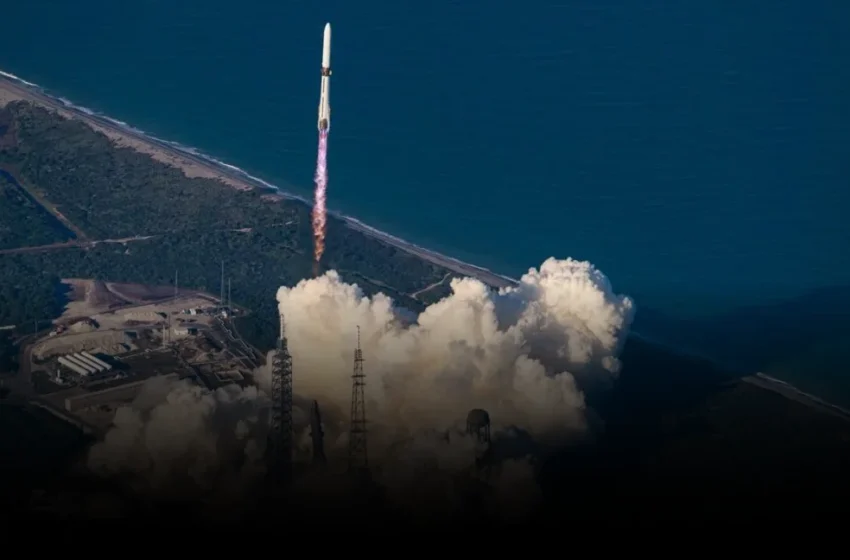
US Space Force’s Ambitious Push: The Quest for a New Heavy-Lift Spaceport
The US Space Force is urgently seeking to establish a third heavy-lift spaceport by 2030, a critical move to alleviate mounting operational pressure on existing launch facilities in Florida and California and bolster national space capabilities. This ambitious timeline, however, faces significant hurdles, including the unidentified location for such a complex facility and the intricate process of land acquisition. Air Force Secretary Troy Meink confirmed the necessity for “another site that’s capable of heavy and super heavy launch capability,” citing a congressionally mandated study that underscored this strategic gap.
This drive for a new launch site is not merely about expansion; it’s a strategic imperative for American space leadership and national security. With space becoming an increasingly contested domain and commercial activity skyrocketing, the current infrastructure, which has served the nation for nearly 70 years, is nearing its operational limits. The search highlights a core challenge: how to rapidly develop new, specialized infrastructure capable of supporting the next generation of massive rockets while navigating complex logistical, economic, and environmental landscapes across the United States.
Why America Needs a Third Heavy-Lift Launch Site
America’s reliance on space for everything from GPS navigation and weather forecasting to national defense and global communications has never been greater. The US Space Force, established in 2019, recognizes that current launch infrastructure, primarily concentrated at Cape Canaveral Space Force Station in Florida and Vandenberg Space Force Base in California, is under immense strain. These two critical bases, long the backbone of US space access, are struggling to meet the escalating demands of both government and private industry launches.
The current operational tempo is unprecedented. The past decade has seen a dramatic increase in launch frequency, driven by the proliferation of commercial satellite constellations like SpaceX’s Starlink and Amazon’s Project Kuiper, alongside critical national security missions. This increased launch cadence translates into greater wear and tear on facilities, increased scheduling conflicts, and limited surge capacity in times of crisis. A single launch failure, or even a severe weather event, at one of the existing sites can cascade into significant delays across multiple vital missions.
Establishing a third heavy-lift launch site provides crucial redundancy, a cornerstone of any robust national infrastructure. Should one site be compromised by a natural disaster, an accidental incident, or even an adversary attack, the nation’s ability to access space would not be entirely crippled. This redundancy is vital for maintaining continuous access to orbit for defense assets, intelligence gathering, and supporting critical civilian infrastructure, thereby safeguarding US national security interests and economic stability in space.
The Steep Challenge of Siting a Spaceport: More Than Just Open Land
Identifying and developing a suitable location for a new heavy-lift spaceport in the United States presents a monumental undertaking, far beyond simply finding a vast expanse of undeveloped land. The technical, environmental, and political requirements are stringent and often conflicting.
Key Requirements for a Heavy-Lift Spaceport
The selection process for a new spaceport must meticulously consider a multitude of factors, each with significant implications:
| Requirement | Description | Example Rationale |
|---|---|---|
| Geographic Location | Coastal access (Atlantic or Pacific), clear downrange over unpopulated areas (ocean). | Safety from falling debris; optimal orbital mechanics for various inclinations. |
| Exclusion Zones | Large, sparsely populated areas around launch pads, extending several miles (kilometers), for safety during operations. | Minimizing risk to human life and property during launch, ascent, and potential abort scenarios. |
| Infrastructure Access | Proximity to deep-water ports, major highways, and robust rail lines for transporting massive rocket components. | Efficient logistics for delivering colossal booster stages, core vehicles, and large payloads. |
| Weather Conditions | Low incidence of lightning, high winds, and severe storms throughout the year. | Ensuring launch safety, minimizing delays, and protecting expensive launch vehicles. |
| Skilled Workforce | Access to an existing talent pool of aerospace engineers, technicians, and operational staff, or the capacity to attract one. | Staffing complex operations, fostering innovation, and supporting ancillary industries. |
| Regulatory Clearances | Capacity for extensive environmental impact assessments and permits, adhering to federal and state regulations. | Complying with the National Environmental Policy Act (NEPA) and protecting sensitive ecosystems. |
For heavy-lift vehicles, which generate immense thrust and carry significant amounts of propellant, safety is paramount. Launch trajectories must primarily pass over unpopulated oceans to minimize risk from falling debris or, in the rare event of a catastrophic failure, safely disperse fragments. This largely confines viable sites to the East or West Coasts, similar to existing facilities. Interior states, while offering vast expanses, pose unacceptable risks due to overflight of population centers and landmasses.
Beyond geography, the logistical demands are staggering. Rockets like NASA’s Space Launch System (SLS) or SpaceX’s Starship are colossal, requiring specialized barges, heavy-haul trucks, and sometimes even custom-built rail lines for transport from manufacturing facilities to the launch pad. A new spaceport would need robust transportation arteries capable of handling these immense components. Furthermore, the environmental impact assessment process under the National Environmental Policy Act (NEPA) is notoriously time-consuming, often taking years to complete, involving detailed studies and extensive public consultation before any ground can be broken.
Economic Liftoff: Potential Regional Impact of a New Spaceport
The establishment of a new heavy-lift spaceport represents an unparalleled economic opportunity for the chosen region. It promises not just a facility, but the creation of a vibrant aerospace ecosystem, drawing significant federal investment and private sector capital.
The economic benefits would be multi-faceted: thousands of direct jobs for highly skilled professionals in engineering, manufacturing, operations, and maintenance, alongside a substantial number of indirect jobs in construction, logistics, hospitality, and local services. The Space Coast of Florida, anchored by Cape Canaveral, serves as a powerful testament to this phenomenon, evolving into a major tech hub with an estimated direct economic impact in the tens of billions of dollars annually for the state. Similarly, Vandenberg in California has been a significant economic driver for its surrounding communities.
Beyond direct employment, a new spaceport would stimulate growth in ancillary industries. Specialized manufacturing for rocket components, advanced materials research, data analytics, and even tourism could flourish. Local infrastructure, including roads, utilities, and broadband internet, would inevitably see significant upgrades. States and localities across the US are keenly aware of these potential boons, making the competition to host such a facility intense, with many jurisdictions likely to offer incentives and partnerships to attract the Space Force’s attention.
What are the Next Steps for the US Space Force?
With the aspiration of a new spaceport by 2030, the US Space Force faces a demanding four-year window that requires accelerated decision-making and robust execution. The immediate priorities involve comprehensive site selection studies, leveraging geographic information systems and expert analysis to narrow down potential locations based on the stringent criteria discussed.
Simultaneously, the Space Force will need to engage in extensive consultations with relevant federal agencies, state and local governments, and indigenous communities. Securing the necessary land, potentially through a combination of purchases, federal land transfers, or even eminent domain, will be a legally and politically sensitive process. Congressional authorization and dedicated funding allocations will be paramount, requiring strong advocacy from the Pentagon to ensure the project stays on track and adequately resourced.
Given the complexity and scale, it’s highly probable that the project will involve significant public-private partnerships. The commercial space sector, with its agility and innovative approaches to infrastructure development, could play a crucial role in accelerating the design, construction, and operation of certain elements of the new spaceport. Such collaborations would allow the Space Force to tap into private investment and expertise, potentially streamlining the development process while ensuring that the new site meets both military and commercial needs.
Key Takeaways for America’s Space Future
- The US Space Force urgently needs a third heavy-lift spaceport by 2030 to ensure national security and maintain space leadership.
- Existing launch sites in Florida and California face unsustainable pressure from escalating government and commercial launch demands.
- Siting a new spaceport requires highly specific geographical, logistical, environmental, and political considerations, favoring coastal locations.
- The project promises substantial economic benefits for the chosen US region, including job creation and infrastructure development.
- Accelerated planning, robust funding, and potential public-private partnerships are critical for meeting the ambitious four-year timeline.
Why does the US Space Force need a new heavy-lift spaceport?
The US Space Force needs a new heavy-lift spaceport to relieve operational strain on its two existing facilities, increase launch capacity for a growing number of national security and commercial missions, and provide vital redundancy against potential disruptions, safeguarding continuous access to space.
What are the primary challenges in establishing a new spaceport?
Establishing a new spaceport faces challenges including identifying a geographically suitable coastal location, acquiring vast tracts of land, navigating complex environmental regulations, securing sufficient infrastructure (deep-water ports, highways), and gaining local community support within an ambitious four-year timeframe.
How long might it take to get a new launch site operational?
While the US Space Force aims for a new spaceport by 2030, the typical timeline for such large-scale infrastructure projects, including site selection, environmental assessments, land acquisition, design, and construction, often stretches beyond four years. Expedited processes and significant investment would be required to meet this ambitious target.
Which regions of the US are most likely to host a new spaceport?
Viable regions for a new heavy-lift spaceport are predominantly coastal, allowing launch trajectories over unpopulated ocean areas. This points to potential locations along the Atlantic or Gulf Coasts for eastward launches, or along the Pacific Coast for southward polar launches, similar to where current US spaceports are situated.
