
Cyborg Cockroaches: The Unspoken Dual-Use Challenge Beyond Disaster Aid
- Robotics
Arjun Vedanta
- 0
- 5 minutes read
The Unsettling Leap from Observation to Intervention
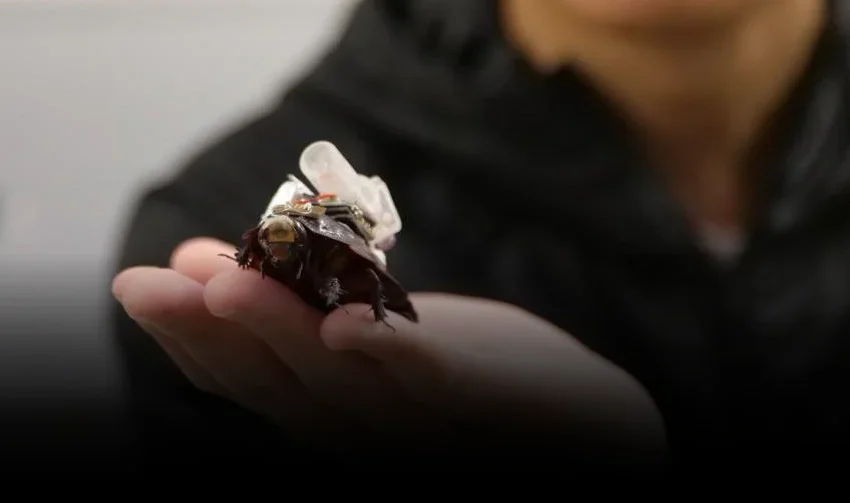
When University of Queensland researchers demonstrated remote-controlled cyborg cockroaches equipped to inject medication into disaster victims, the tech world applauded the ingenuity. But beyond the immediate thrill of bio-hybrid innovation lies a more unsettling implication: the quiet normalization of direct biological intervention without a corresponding ethical and regulatory framework.
For decades, bio-robotics has offered tantalizing glimpses into leveraging nature’s designs for human benefit, typically for ‘search and explore’ missions. Dr. Tan Vo Doan, a key researcher from UQ, explicitly stated, “Cyborg insects have been designed for ‘search and explore’ missions for the past couple of decades. We wanted to take the next step.” That step, the creation of the ‘Paraborg,’ transitions from mere reconnaissance to active, remote medical intervention – a profound shift that carries far greater weight than the simplified headlines suggest.
The technical achievement is undeniable. Researchers at UQ and UNSW anesthetized giant burrowing cockroaches, embedded electrodes into their antennae and cerci, and attached microchips. These creatures, measuring up to 87 millimeters and weighing up to 40 grams, were then outfitted with either cameras or automatic injection mechanisms. Despite adding about 17 grams and 15 millimeters in height for the injection apparatus, the study found no significant impairment to their movement. The ability to steer these bio-drones with electrical stimuli ranging from 10 to 40 hertz, and to trigger a spring-loaded syringe via a citric acid and baking soda reaction, represents a remarkable feat of engineering.
The Slippery Slope of ‘Saving Lives’ and Dual-Use Tech
The immediate incentive, as always, is framed as purely humanitarian. The promise of tiny, remotely controlled agents navigating collapsed structures to locate and administer aid within minutes – a task impossible for humans or larger robots – is compelling. The UQ team even demonstrated a 72 percent success rate for a full sequence, from departure to injection, and a striking 95 percent success for close-range injections. These numbers bolster the narrative that such technology is an unequivocal good, a silver bullet for search and rescue.
Yet, this framing cleverly sidesteps the inherent dual-use nature of this advancement. Any technology developed to operate autonomously or semi-autonomously in dangerous, inaccessible environments, especially one involving precision intervention, carries significant strategic value beyond its initial benevolent purpose. The capacity to remotely control a living organism for a targeted action, even a medical one, opens a global Pandora’s Box. If a cockroach can deliver medication, what else can it deliver? What other actions might be remotely triggered on a biological agent in a contested zone?
This isn’t to diminish the genuine aspirations of the researchers. However, the international community has consistently struggled to create frameworks fast enough to keep pace with bio-technological innovation. When the focus remains solely on the immediate, positive application – “these cyborg cockroaches could save your life” – the deeper implications of control, autonomy, and potential weaponization are often pushed into the background. The cheerful framing of ‘saving lives’ often masks the deeper, more complex questions of control and consequence.
The Urgent Need for Global Bio-Robotics Governance
The timeline for potential deployment is surprisingly short, with hopes of rescue teams of cyborg insects appearing in actual disaster sites within five to 10 years. This rapid progression underscores the urgency. While the current experiments were not conducted in the chaotic, unpredictable conditions of a real disaster, the trajectory is clear: refinement and real-world application are on the horizon. The very success of coordinating multiple insect agents – one with a camera, another with an injector – showcases a rudimentary swarm intelligence that could scale quickly.
Herein lies the critical oversight in current global tech discourse. While Silicon Valley obsessively debates AI ethics for algorithms and data, the conversation around the direct, real-time control of living organisms for targeted actions remains nascent. There are no international treaties or widely accepted regulatory bodies specifically designed to govern bio-hybrid systems like Paraborg, especially as they cross the threshold from observation to direct physical and potentially biological intervention. The United Nations’ Biological Weapons Convention is ill-equipped for such nuanced, individual-level manipulation.
The precedent for military interest in insect-sized robotics is well-established, often cloaked in reconnaissance or surveillance. This research, translated from WIRED Japan, is a global story because it demonstrates a capability that transcends national borders and traditional regulatory thinking. The challenge isn’t simply about preventing misuse; it’s about establishing preemptive ethical guidelines and robust international oversight before the technology matures and proliferates in unregulated spaces. Otherwise, the benevolent intentions of today’s disaster relief innovation could inadvertently pave the way for unsettling applications tomorrow, long before the world catches up.
