
Europe’s Private Space Race: Isar Aerospace’s Launch Exposes Deeper Fragmentation
- Space
Arjun Vedanta
- 0
- 4 minutes read
The Illusion of European Unity in Orbit
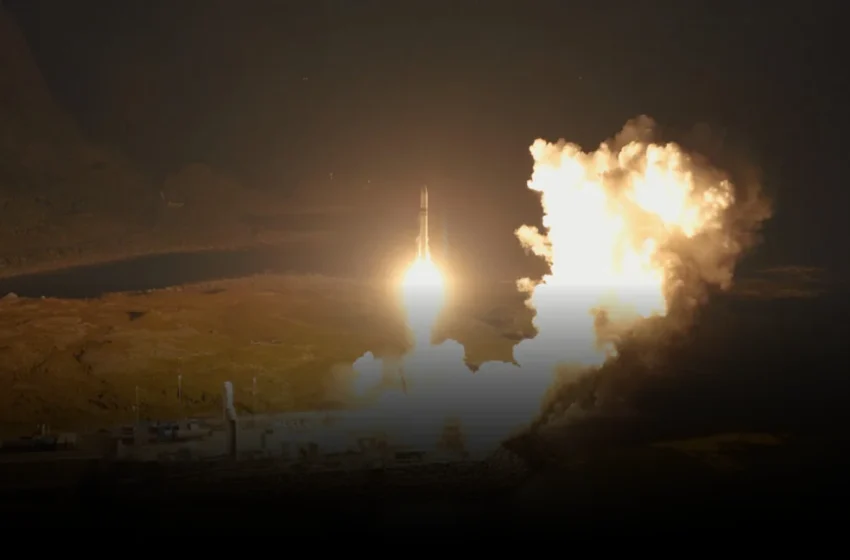
The boilerplate headline declared Isar Aerospace’s orbital success a win for European commercial space. It was. But this technical triumph, where a privately-developed, 92-foot-tall Spectrum rocket ascended from Andøya Spaceport in northern Norway and achieved orbit in just seven minutes, masks a far more complex and politically fractured reality.
For years, European space ambition has been defined by the stately, often bureaucratic, cadence of the European Space Agency (ESA) and its flagship Ariane rocket family. Yet, as the US commercial space sector, spearheaded by giants like SpaceX and agile players such as Rocket Lab, reshaped launch economics, Europe found itself increasingly reliant on external providers or mired in development delays for its next-generation vehicles.
Isar Aerospace, founded by three German students in 2018, now represents a crucial, albeit localized, answer to this dilemma. Its successful launch last Saturday makes it the first fully commercial European launch vehicle to reach orbit, a significant milestone that puts it ahead of other continental contenders. Yet, beneath the celebratory press releases, what Isar Aerospace’s achievement truly exposes is not a unified European leap into the commercial space age, but rather a frantic, fragmented scramble by individual states to cobble together sovereign launch access after decades of strategic complacency.
Cost, Control, and The Continental Gap
Europe’s historical approach to space, often a delicate balancing act of national contributions and industrial return, made it uniquely vulnerable to the paradigm shift brought by reusable rockets and lean startup models. The institutional behemoths like ArianeGroup, while delivering impressive heavy-lift capabilities, struggled to adapt to the lower costs and rapid iteration cycles demanded by the burgeoning small satellite market.
This is where Isar Aerospace and a host of other European micro-launcher startups, often backed by national governments and investment funds, enter the picture. The push now for national commercial champions like Isar is less about fostering a vibrant, unified European space industry and more about pragmatically—or perhaps desperately—securing essential launch services for national defense and geospatial intelligence assets, circumventing the slower, costlier pathways of traditional pan-European programs.
The incentive is clear: assured access to orbit, free from geopolitical dependencies or the scheduling woes of multinational consortia. But this ad-hoc, nationalistic embrace of commercial space risks creating a European landscape dotted with several sub-scale launch providers, each catering primarily to its home country’s needs, rather than forging a single, economically robust, and truly integrated continental launch capacity capable of competing globally.
Beyond the Arctic Circle: A Narrow Victory
Isar’s Spectrum rocket lifting off from Andøya Spaceport in northern Norway on a late summer evening was undoubtedly a triumph of German engineering and entrepreneurial spirit. The successful insertion into low-Earth orbit, achieved a mere seven minutes after a 20:12 UTC liftoff, proves that European startups can execute complex orbital mechanics with precision and speed.
However, this event, while celebrated as a pivotal “European first,” highlights a persistent structural implication. The very fact that a German company needed to launch from Norway underscores the patchwork nature of Europe’s current space infrastructure and regulatory environment. It speaks to a collection of national ambitions loosely aligned under a “European” banner, rather than a single, cohesive strategy.
The question for intelligent observers isn’t merely whether Europe can launch its own satellites. It’s whether it can do so efficiently, affordably, and with a unified strategic vision that transcends national borders. Until that deeper integration materializes, Isar Aerospace’s impressive technical victory, while well-deserved, remains a narrow one on the broader battlefield of global space power.
