
Japan’s MMX Mission to Phobos: How it Fuels US Deep Space Ambitions
- Space
Arjun Vedanta
- 0
- 7 minutes read
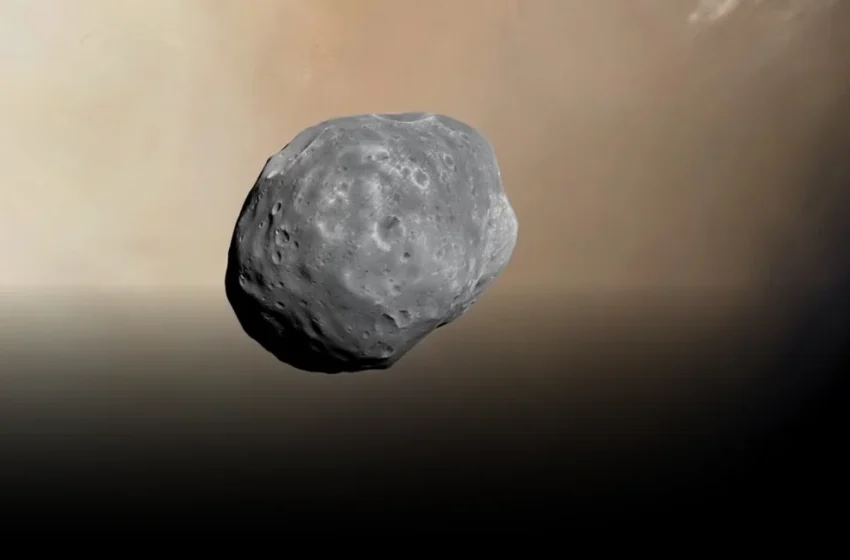
Japan’s Phobos Mission: A Giant Leap for US Martian Ambitions
Japan’s recent launch of the Martian Moons eXploration (MMX) mission marks a pivotal moment, not just for Japanese space ambitions, but for American deep space science and future human expeditions to Mars. This five-year, $578 million endeavor to retrieve samples from Phobos, Mars’s largest moon, offers a critical opportunity to unravel the red planet’s geological past and could significantly inform NASA’s long-term strategy for crewed missions.
The MMX mission, taking off from Japan’s Tanegashima Space Center, isn’t merely an independent scientific venture. It’s a testament to the increasingly collaborative nature of international space exploration, where one nation’s success directly contributes to global scientific understanding and technological advancement. For American readers, this mission represents a strategic collaboration that can accelerate our own goals for Mars, providing invaluable data without the direct financial or logistical burden of a solely US-led sample return from a Martian moon. This shared pursuit of knowledge could lay groundwork for joint human endeavors.
The MMX mission, with its ambitious goal of retrieving regolith samples from Phobos, directly feeds into the broader strategic aims of American space exploration. While led by the Japan Aerospace Exploration Agency (JAXA), its success could provide foundational data that significantly de-risks and optimizes future NASA missions, both robotic and human, to the Mars system. The project, budgeted at $578 million, represents a substantial investment by Japan in a field where international collaboration is becoming the norm rather than the exception.
The H3 rocket, a 207-foot-tall (63-meter) vehicle that carried MMX into orbit, demonstrated its robust capabilities during the Monday launch. This particular configuration, featuring four strap-on solid rocket boosters and full-throttle main engines, marks a significant step for Japan’s flagship launch vehicle, ensuring it can accommodate the demands of complex interplanetary missions. For the US, a reliable international launch partner like JAXA and the H3 adds critical redundancy and capacity to the global space transport ecosystem, potentially supporting future collaborative payloads.
Unlocking Mars’s Past: Why Phobos Samples Matter to America
The primary scientific objective of MMX — determining the origin of Phobos — holds profound implications for understanding the entire Martian system, a key focus for American planetary science. There are two leading theories for how Mars’s moons, Phobos and Deimos, came to be. One posits they are captured asteroids, gravitationally pulled into Mars’s orbit. The other, perhaps more exciting, suggests they are remnants from a colossal impact that Mars suffered early in its history, similar to how Earth’s moon is thought to have formed.
Retrieving samples from Phobos is the only way to definitively answer this question. If the samples show a composition similar to asteroids, it supports the capture theory. If they reveal a geochemical signature matching Mars itself, it points to a giant impact. For NASA scientists, resolving this debate could refine models of planet formation, early solar system dynamics, and the evolution of Mars’s geological and atmospheric conditions, directly influencing where and how American rovers like Perseverance search for signs of ancient life. The direct analysis of pristine material, untouched by Earth’s environment, offers an unparalleled scientific bounty.
Collaborative Horizons: How MMX Strengthens US Deep Space Exploration
The MMX mission is not a solely Japanese undertaking; it embodies significant international partnership, including contributions from US entities. NASA has been a crucial partner, providing technical expertise and, critically, support through its Deep Space Network (DSN). The DSN’s massive radio antennas across the globe are essential for communicating with spacecraft millions of miles from Earth, enabling command uplink and telemetry downlink for complex missions like MMX. This infrastructure sharing is a cornerstone of international space cooperation.
Beyond logistical support, American scientists are actively involved in the mission’s scientific planning and data analysis. This collaboration ensures that the scientific returns from MMX are maximized for the global scientific community, including researchers at US universities and institutions. The lessons learned from MMX regarding sample acquisition, robotic autonomy in low-gravity environments, and interplanetary navigation will directly inform NASA’s own future sample return endeavors, whether from asteroids like OSIRIS-REx’s Bennu mission or future Martian missions. This shared knowledge accelerates the pace of discovery for everyone.
Beyond the Science: Phobos as a Stepping Stone for Future Human Missions
The MMX mission offers more than just scientific samples; it provides invaluable engineering and operational data crucial for NASA’s long-term vision of sending humans to Mars. Understanding the surface properties, regolith mechanics, and radiation environment of Phobos is vital if humanity ever intends to utilize it as a staging ground for Mars missions. Phobos, with its extremely low gravity (just a few thousandths of Earth’s gravity), presents unique challenges and opportunities for future space operations.
For American astronauts planning deep-space voyages, Phobos could serve as a potential outpost. Its proximity to Mars allows for remote operation of surface assets on the red planet, while potentially reducing the radiation exposure risks associated with landing on Mars itself. Data from MMX could inform the design of future habitats, mining operations for water ice (if present), or even fuel depots. The engineering experience gained from MMX’s landing and sample collection sequence on such a small, irregular body will be directly applicable to developing future human and robotic operations in similar low-gravity environments, which are prevalent throughout the Solar System.
Conclusion
The MMX mission represents a powerful testament to international cooperation in space, with tangible benefits for American scientific and strategic interests. This Japanese-led endeavor is set to redefine our understanding of Mars and its moons, offering critical insights that will inform the next generation of US-led deep space exploration.
- The MMX mission is crucial for understanding the origins of Phobos, directly impacting our knowledge of Mars’s formation and evolution.
- US contributions through the Deep Space Network and scientific collaboration underscore the mission’s shared international value.
- Data from MMX will directly inform NASA’s future robotic and human missions, especially regarding sample return techniques and low-gravity operations.
- Phobos offers a potential strategic outpost, and MMX’s findings could lay the groundwork for its future utilization as a stepping stone to Mars.
- Japan’s successful H3 launch demonstrates expanding global capabilities in launching complex interplanetary missions.
What is the MMX mission?
The Martian Moons eXploration (MMX) mission is a Japanese-led, international space expedition aiming to land on Phobos, Mars’s largest moon, and collect samples of its surface material for return to Earth. The mission is planned to last five years, providing unprecedented insights into the moon’s origin and the Martian system.
Why is the MMX mission important for US space exploration?
The MMX mission is vital for US space exploration because it will provide critical data on the formation of Mars’s moons, directly impacting American understanding of planetary evolution. It also offers invaluable engineering and operational experience for future sample return missions and potential human expeditions, with NASA contributing through its Deep Space Network and scientific collaboration.
How will MMX help future human missions to Mars?
By sampling Phobos, MMX will provide data on its composition, regolith characteristics, and radiation environment. This information is crucial for planning future human missions, as Phobos could serve as a staging ground for Mars exploration, offering a lower-gravity environment for operations and potentially harboring resources like water ice that could be used by astronauts.
