
Nvidia’s Halos System Aims to Standardize AI Safety, Accelerating US Robotics Adoption
- Artificial Intelligence
Arjun Vedanta
- 0
- 9 minutes read
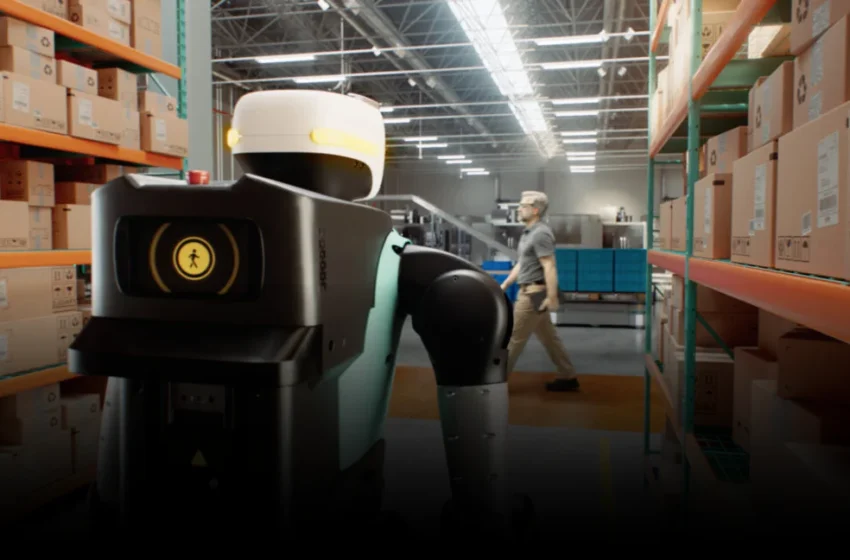
Nvidia’s Halos safety system for physical AI is poised to become a critical enabler for the widespread adoption of autonomous robots across US industries. By providing a full-stack hardware and software architecture to build in safety guardrails, Halos directly addresses the paramount concern of preventing machines from harming humans, a necessary step for navigating regulatory hurdles and building public trust in advanced robotics. This initiative by a multi-trillion-dollar market leader highlights a strategic pivot towards practical, real-world AI deployment beyond data centers, particularly impacting manufacturing, logistics, and healthcare sectors across America.
While investors largely fuel Nvidia’s impressive multi-trillion-dollar market capitalization with bullish sentiment on its AI data center dominance, the company has simultaneously committed billions of dollars to the frontier of physical AI. This includes substantial investments in robotics and self-driving vehicles, where the rubber meets the road—literally and figuratively. The development of Halos underscores Nvidia’s intent to not just power AI, but to ensure its safe integration into our physical world, a crucial aspect for any meaningful penetration into American markets and daily life.
From Data Centers to Real-World Robots: Nvidia’s Strategic Bet on Physical AI Safety
Nvidia’s journey into physical AI marks a significant evolution from its core business of accelerating data center computing. The shift acknowledges that while powerful AI models are foundational, their real-world application requires robust interfaces with the physical environment. This involves not just processing data, but interacting with humans, navigating dynamic spaces, and performing tasks that directly impact safety and well-being.
The company first introduced the Halos system in 2025, providing hardware and software tools specifically for developing safety guardrails in self-driving cars and other autonomous vehicles. Recognizing the broader need, Nvidia expanded this safety architecture by announcing Nvidia Halos for Robotics in June 2026. This expansion signaled a clear strategy to address safety challenges across a wider spectrum of autonomous machines, moving beyond just vehicles to a diverse range of robotic applications.
Why Safety is the Critical Bottleneck for American Automation
As autonomous technology matures, safety emerges as the primary impediment to widespread adoption, particularly in the United States. Amit Goel, head of robotics ecosystem and edge computing at Nvidia, articulated this challenge, stating, “Now the AI models are getting capable, the robot hardware is getting capable, and a thing we thought is going to be the next bottleneck is safety. So that’s why we launched our Halos for Robotics to unlock the capability of these systems.” This bottleneck is acutely felt in American industries eager to leverage automation.
Consider the diverse environments where these advanced robots are envisioned to operate across the US. In bustling e-commerce warehouses, autonomous mobile robots (AMRs) must safely navigate alongside human workers, avoiding collisions and adapting to unpredictable movements. Within advanced manufacturing facilities, humanoid robots performing complex assembly tasks need stringent safety protocols to prevent injuries to nearby technicians. Even in healthcare, surgical robots demand absolute precision and fault tolerance to ensure patient safety.
The stakes are incredibly high. A single major safety incident involving an autonomous system in the US could erode public trust, trigger severe regulatory backlash, and significantly slow down adoption across entire sectors. Federal agencies and state legislatures are closely watching, and robust, verifiable safety frameworks like Halos are essential to provide the confidence needed for broad deployment and to inform future policy development.
Decoding Nvidia Halos: A Full-Stack Architecture for Trust
Nvidia’s Halos system is engineered as a “full-stack” safety architecture, meaning it encompasses both hardware and software components designed to work in concert to ensure operational security. This comprehensive approach is critical because safety in autonomous systems cannot be an afterthought; it must be ingrained at every layer, from the foundational silicon to the highest-level application code.
The initial Halos system for autonomous vehicles, launched in 2025, laid the groundwork by offering tools to help developers implement crucial safeguards, such as redundant control systems, robust sensor fusion for environmental awareness, and predictable decision-making algorithms. The subsequent Halos for Robotics, announced in June 2026, extends these principles to industrial and service robots.
For autonomous mobile robots in a logistics hub, Halos might provide certified hardware modules for emergency braking and obstacle detection, alongside software libraries that manage safe path planning and human-robot interaction zones. For humanoid robots in a factory, it could offer integrated systems for safe manipulation, ensuring arm movements are constrained and predictable when humans are nearby. For surgical robots, the system would incorporate rigorous validation tools and diagnostic capabilities to minimize procedural risks.
The goal is to enable companies to build upon Nvidia’s established safety primitives, significantly reducing the development burden and the inherent risks associated with creating safety-critical systems from scratch. This standardization could streamline the process for obtaining necessary certifications and approvals, a major challenge for advanced robotics in the US.
The American Blueprint: Halos as a Catalyst for Industrial Transformation
Nvidia Halos stands to play a pivotal role in accelerating the safe integration of advanced robotics into key American industries. By offering a credible, full-stack safety solution, Nvidia is effectively lowering the barrier to entry for companies hesitant to deploy autonomous systems due to safety concerns and potential liability.
-
Manufacturing and Logistics: US factories and warehouses face increasing pressure to optimize efficiency and address labor shortages. Halos could accelerate the deployment of autonomous systems, leading to more productive operations, reduced accidents through predictable robot behavior, and potentially even contributing to reshoring manufacturing by making automated production more viable and reliable on American soil.
-
Healthcare: The precision and consistency offered by surgical robots and autonomous delivery systems in hospitals can transform patient care. Halos, by providing a robust safety framework, can bolster confidence among medical professionals and regulators, facilitating broader adoption of these life-changing technologies while maintaining rigorous safety standards.
-
Public Trust and Regulation: A standardized, widely adopted safety platform like Halos could significantly influence how federal agencies and industry bodies in the US approach robotics regulation. It could become a de facto standard, providing a common benchmark for safety assurance and fostering consumer confidence in a world increasingly populated by intelligent machines.
The economic implications for the US are substantial, promising not just increased productivity but also the creation of new high-skill jobs in areas like robotics engineering, AI safety auditing, and autonomous system maintenance. This proactive approach to safety by a major tech player helps lay a crucial foundation for the next wave of American innovation and industrial competitiveness.
Nvidia’s Halos system represents a crucial strategic move, extending its AI leadership from data centers to the physical world. By directly tackling the bottleneck of safety, particularly with its Halos for Robotics expansion, Nvidia aims to accelerate the deployment and build trust in autonomous systems across vital US industries. This full-stack approach promises to streamline development, inform regulatory frameworks, and ultimately unlock the transformative potential of robotics for American businesses and consumers alike.
Key Takeaways
- Nvidia is strategically investing billions in physical AI, including robotics and autonomous vehicles, beyond its data center strength.
- The Halos safety system, first for vehicles and now for robotics, addresses safety as the critical bottleneck for widespread autonomous deployment.
- Halos provides a full-stack hardware and software architecture designed to help developers implement safety guardrails for various robots, including AMRs, humanoids, and surgical robots.
- This initiative is poised to accelerate the safe integration of AI into US manufacturing, logistics, and healthcare, enhancing efficiency and productivity.
- A standardized safety platform like Halos could build public trust and influence regulatory frameworks for autonomous systems in the American market.
Frequently Asked Questions
What is Nvidia Halos?
Nvidia Halos is a comprehensive safety system comprising both hardware and software tools, designed to help developers implement critical safety guardrails for autonomous machines. It prevents these advanced AI systems from harming people and operates safely in dynamic environments.
When was Halos for Robotics announced?
Nvidia announced Halos for Robotics in June 2026, expanding its safety architecture beyond autonomous vehicles (which launched in 2025) to a broader range of physical AI technologies like warehouse robots and humanoid robots.
How does Halos benefit US industries?
Halos benefits US industries by providing a standardized, robust safety framework that can accelerate the deployment of autonomous robots in manufacturing, logistics, and healthcare. This can lead to increased efficiency, reduced accidents, and foster greater trust among workers and the public.
Why is safety a "bottleneck" for robotics deployment?
Safety is a bottleneck because while AI models and robot hardware are becoming highly capable, the ability to guarantee safe, predictable, and reliable operation alongside humans in complex environments is still a major challenge that needs to be overcome for widespread adoption and regulatory approval.
