
Russia’s Struggling Starlink Rival: More Than Just Orbital Troubles
- Space
Arjun Vedanta
- 0
- 4 minutes read
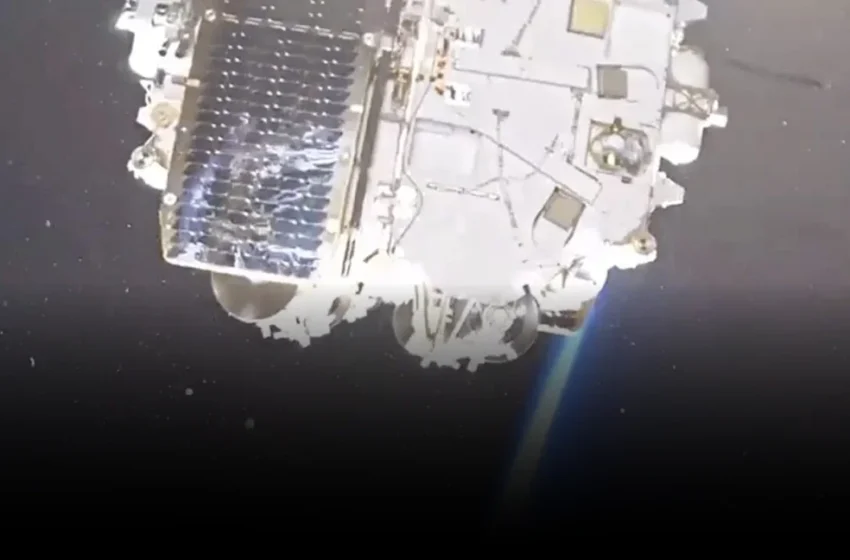
Russia’s Orbital Ambitions Fall Short
Thirty-two satellites circle Earth, but none are where they are supposed to be. This isn’t a minor technical hiccup; it’s a stark indicator of Russia’s systemic struggle to replicate advanced Western space infrastructure, implying broader geopolitical and technological vulnerabilities beyond mere internet connectivity.
The Rassvet program, touted as Moscow’s answer to SpaceX’s Starlink, began launching operational satellites earlier this year. Two separate launches, one in March and another in July, deployed these initial 32 spacecraft into low-Earth orbit. The stated goal for Bureau 1440, the company behind Rassvet, is ambitious: roughly 300 satellites by the end of next year, expanding to a formidable 924 by 2035, all to provide crucial connectivity for both military and civilian users.
However, the hard truth is that every one of these 32 satellites remains far from its intended 500-mile (800-kilometer) operational orbit. The rockets placed them much closer to Earth, relying on the satellites’ onboard plasma engines to eventually boost themselves into position. This is not a standard, efficient deployment, but a workaround that signals fundamental challenges.
The Illusion of Replication, Not Innovation
The core problem isn’t just about plasma engines or orbital mechanics; it’s about a deeply ingrained approach to technological development. While Starlink demonstrates rapid iteration and deployment, with thousands of satellites actively beaming connectivity, Rassvet appears bogged down by a more traditional, state-driven, and ultimately slower process. Russia’s ambition to merely match Starlink misses the core innovation that makes Starlink resilient: a dynamic, rapidly iterating commercial-military fusion.
SpaceX’s strategy for Starlink has been to continuously launch, learn, and upgrade at a pace unimaginable for most government-led programs. They leverage economies of scale, commercial imperatives, and the constant feedback loop of a global customer base. In contrast, Rassvet’s challenges with initial orbital insertion suggest a much greater friction in design, engineering, and manufacturing. This isn’t just a race to build more satellites; it’s a competition of development philosophies.
The delay in orbital positioning for these initial 32 satellites, a mere 10 percent of the immediate target, highlights the chasm between stated goals and operational reality. It reveals a supply chain that struggles with precision, a manufacturing base that cannot easily scale, and an overall aerospace industry that lags behind its Western counterparts in agile development and component reliability for complex Low Earth Orbit (LEO) constellations.
Geopolitical Gravity: Why This Delay Matters
This ongoing saga is less about an immediate connectivity solution for Russia and more about a persistent, performative geopolitical declaration, intended to project capability where tangible results are scant. For Moscow, a sovereign satellite internet constellation is a matter of national security and strategic autonomy, especially in an era of heightened geopolitical tension and a desire to decouple from Western digital infrastructure.
The military implications alone are significant. Reliable satellite internet offers critical battlefield communications, drone control, and intelligence gathering — capabilities that Starlink has demonstrably provided to Ukraine. A faltering Rassvet program leaves Russia reliant on less resilient or foreign systems, or, worse, with significant gaps in crucial dual-use technology.
Furthermore, the long-term target of 924 satellites by 2035 now looks less like an achievable roadmap and more like an aspirational timeline divorced from current technical capabilities. Each launch, each satellite failing to reach its designated orbit, chips away at Moscow’s narrative of technological independence. It underscores a fundamental truth about modern space infrastructure: it’s not enough to possess the ambition to build; one must also possess the manufacturing prowess, the supply chain resilience, and the engineering agility to execute on a global scale. This is where Russia, for all its historical space prestige, is currently falling short.
