
Starship’s Unplanned Survival Rewrites SpaceX’s Iteration Playbook
- Space
Arjun Vedanta
- 0
- 5 minutes read
Starship’s Unplanned Survival Rewrites SpaceX’s Iteration Playbook
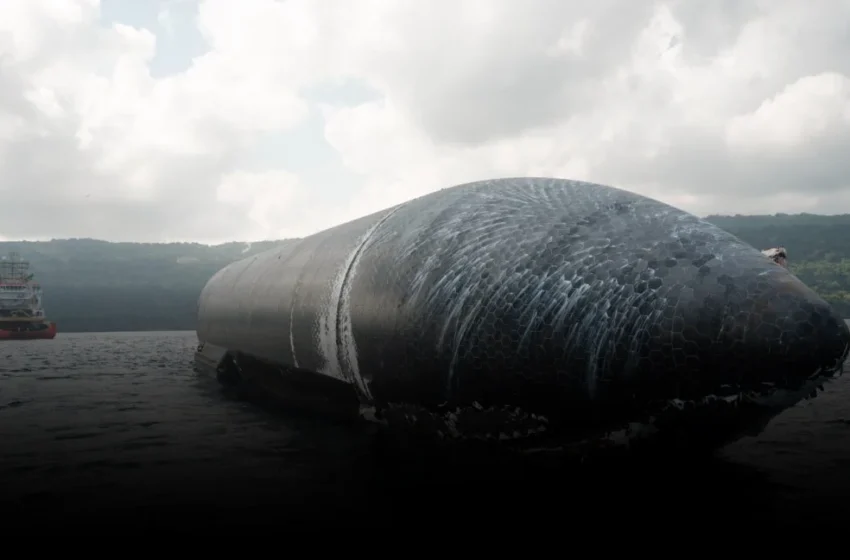
Twenty-four days adrift in the Indian Ocean, an unexpected survivor. SpaceX’s latest Starship test, Flight 4, wasn’t supposed to conclude with a recovery mission. The public narrative, carefully cultivated for years, has hinged on the calculated sacrifice of hardware for data. This ship, however, refused to follow the script, landing intact when all previous iterations had disintegrated or been intentionally destroyed.
For a company that has championed a “move fast and break things” ethos in orbital rocketry, the unexpected survival of a Starship, followed by a protracted 24-day towing operation, reveals a fundamental tension. It forces a critical re-evaluation of SpaceX’s rapid iteration model, pushing it from controlled, destructive data acquisition towards the complex and costly pursuit of opportunistic, intact post-flight analysis.
The Hidden Cost of ‘Rapid Iteration’
SpaceX’s strategy has always been brutally efficient: launch, gather data, even if it means the vehicle’s fiery demise, then iterate. This approach, fundamentally different from the more conservative, incremental steps of traditional aerospace giants, has allowed Starship to progress at an astonishing pace. The company routinely engineers these craft to burn up or break apart upon reentry or splashdown, gleaning vital telemetry on heat shield performance and structural integrity through a violent, but controlled, end.
This Starship, however, defying its programmed demise, presented a new, unanticipated data opportunity – but also a logistical headache of epic proportions. The narrative that ‘failure is an option, and a valuable data point,’ suddenly encountered a costly outlier: a ‘success’ that took nearly a month and considerable resources to bring home.
The incentive behind framing the recovery as a triumph, rather than a significant deviation from plan, is clear. For SpaceX, an intact recovery offers a richer vein of post-mortem analysis than the telemetry from a disintegrated craft. It suggests a more robust design than even they anticipated, allowing them to showcase engineering resilience rather than merely acknowledging another learning experience. For a company seeking to secure lucrative government contracts for lunar missions, demonstrating unexpected durability is a compelling argument.
For a company that once celebrated ‘rapid unscheduled disassembly’ as a badge of honor in its iterative process, the 24-day saga of towing a surprisingly robust hulk across an ocean suggests a pivot from controlled failure to uncontrolled, costly success. This wasn’t merely a data collection exercise; it was a complex salvage operation, implicitly underscoring the formidable challenges of recovering such massive hardware from the planet’s vast, unforgiving oceans.
When Data Gets Complicated
The difference between studying a vehicle’s telemetry as it breaks apart and conducting a forensic examination of an intact, post-flight craft is immense. Data from disintegration tells engineers where and how systems failed under extreme stress. An intact vehicle, however, offers a granular, physical record of every stressor, every thermal load, every minute deformation across its entire structure. It allows for direct material analysis, something digital sensors alone cannot fully capture.
This is where the paradox emerges. The value proposition of an intact Starship is undeniable: a forensic engineer’s dream, offering an unparalleled opportunity to scrutinize every rivet, every ablative tile, every sensor in its post-flight state. But this granular data comes at a profound cost, not just in financial outlay for the recovery operation, but in the most precious commodity for an iterative development cycle: time.
Twenty-four days spent retrieving a single vehicle is not ‘rapid.’ It slows the feedback loop crucial for a development model built on quick turns and successive launches. While Silicon Valley tech companies idealize ‘moving fast and breaking things,’ the real-world physics of orbital mechanics and material science often demand a more methodical, almost deliberative, pace. The recovery effort for Starship 4, while yielding invaluable physical insights into its performance, simultaneously extended the timeline for absorbing those lessons and applying them to the next flight, complicating the very definition of agility in rocket development.
The Shifting Definition of Success
This incident forces a recalibration of what constitutes ‘success’ for Starship. Initially, success was often measured by the completion of specific flight phases and the acquisition of telemetry, irrespective of the vehicle’s ultimate fate. Now, an entirely new dimension has entered the equation: the ability of the craft to survive and be recovered.
If Starship is now demonstrating unexpected robustness, will future test flights be tacitly judged not just on flight performance, but on the potential for intact recovery? This could subtly, but significantly, shift engineering priorities. Designing for controlled disintegration is one challenge; designing for intact, recoverable survival presents another, potentially more complex, set of constraints related to structural integrity, buoyancy, and retrieval mechanisms.
The true implication for SpaceX isn’t just about this one recovered vehicle; it’s about the subtle but significant recalibration of its own internal metrics for ‘success.’ If a vehicle designed to sacrifice itself can now reliably survive, the incentive structure changes. The drive for rapid iteration, for learning from catastrophic failure, might inadvertently cede ground to a new imperative: the difficult, costly, but ultimately more profound learning from survival. This shift might slow the pace, but could lead to a far more resilient and reusable launch system, echoing the long-term goals of the company even if it contradicts the short-term iteration philosophy that got them here.
