
US AI Leadership Faces Geopolitical Tension Amid Alleged Nvidia Spy Plot
- Government & Policy
Arjun Vedanta
- 0
- 8 minutes read
Allegations Surface: National Security vs. Economic Interests
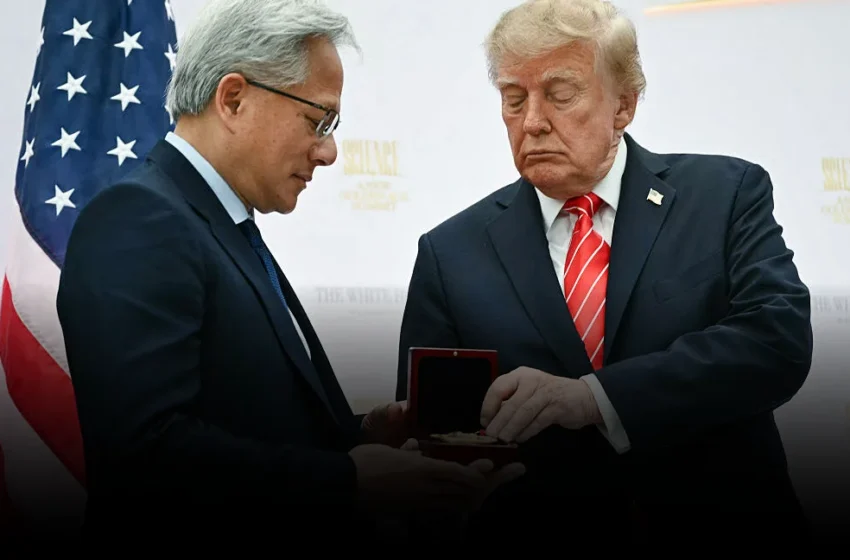
The alleged decision by the former Trump administration to disregard intelligence regarding a potential Chinese spy targeting Nvidia CEO Jensen Huang highlights a critical tension between safeguarding America’s burgeoning AI economic interests and addressing urgent national security concerns. This reported trade-off underscores the complex geopolitical landscape US technology companies, particularly those at the forefront of AI like Nvidia, must navigate, raising questions about the balance between market stability and vigilance against foreign influence.
This development, reported by The New York Times based on anonymous sources briefed on US intelligence, suggests that roughly a year ago, former President Donald Trump received briefings indicating China was receiving reports from an individual with direct access to Jensen Huang. The alleged motive for sidelining these concerns was partly to protect Nvidia’s stock and the broader perception of stability within the US tech sector. For American tech professionals and enthusiasts, this situation lays bare the high stakes involved in maintaining US leadership in artificial intelligence, where economic prowess and national security are inextricably linked.
The Critical Role of Nvidia in US AI Dominance
Nvidia is not just another tech company; it is a foundational pillar of US AI leadership. Its graphics processing units (GPUs) are the bedrock for advanced AI development, from powering large language models to enabling autonomous vehicles and sophisticated scientific computing. The company’s market capitalization has soared, reflecting its indispensable role in the global tech ecosystem.
Jensen Huang, Nvidia’s charismatic CEO, has become a pivotal figure, reportedly advising former President Trump on AI strategy. This close alignment, as Treasury Secretary Scott Bessent noted, where “the president is completely aligned with Jensen Huang, the CEO of Nvidia,” emphasizes the company’s influence in Washington. Protecting Nvidia’s stock and its perceived stability could be seen as safeguarding American economic competitiveness in the global AI race, which is increasingly viewed as a geopolitical contest.
The Alleged Spy: Alice Huang and Export Control Evasion
The individual at the center of the alleged intelligence reports is Alice Huang (also known as Huang Le), a Chinese citizen and former senior executive at Megaspeed, a Singaporean cloud company. US investigators had reportedly already suspected Alice Huang of assisting China in circumventing American export controls designed to restrict Beijing’s access to high-end Nvidia chips.
The alarm for intelligence agencies intensified upon discovering her direct access to Jensen Huang, despite the two sharing no familial relation. The concern was that she could have exploited this proximity to funnel intelligence to China not only about Nvidia’s cutting-edge AI technologies but also to potentially influence US policy discussions, given Jensen Huang’s advisory role to the former President.
Navigating the Treacherous Waters of US-China Tech Rivalry
The reported intelligence about a Chinese spy plot against Nvidia’s CEO underscores the intense technological rivalry between the United States and China. Both nations are vying for supremacy in AI, a domain with profound implications for economic power, military capabilities, and global influence. The US has implemented stringent export controls to slow China’s progress in developing advanced semiconductors and AI capabilities, viewing this as essential for national security.
This competitive environment creates complex challenges for US companies like Nvidia, which operate globally and often have significant revenue streams from markets like China. Balancing the need to comply with US government directives, maintain market share, and protect proprietary technology from espionage is a constant tightrope walk. The alleged decision to prioritize market stability over intelligence warnings highlights the difficulty policymakers face when these competing interests collide.
The Economic and Security Implications for US Tech
For US businesses and the tech workforce, this incident raises several pressing questions about the trade-offs involved in government decision-making:
- Investment Confidence: How might reports of intelligence being set aside impact investor confidence in the tech sector, particularly if it suggests a vulnerability to foreign espionage or a willingness to downplay such threats?
- Supply Chain Security: The incident emphasizes the ongoing challenge of securing the US tech supply chain, especially concerning critical components like advanced semiconductors, against both overt and covert foreign interference.
- Corporate Vulnerability: It highlights the extreme vulnerability of top executives in leading US tech firms to espionage, particularly those with close ties to government officials. Companies must now assess their internal security protocols and executive protection measures more rigorously.
- Policy Consistency: It creates uncertainty about the consistency of US policy towards China, particularly whether economic considerations might, at times, override national security imperatives, potentially emboldening adversaries.
The US government faces a delicate balancing act. On one hand, protecting the economic vitality of a company like Nvidia is crucial for sustaining American innovation and competitiveness. On the other hand, ignoring credible intelligence about espionage could have long-term detrimental effects on national security and technological advantage.
What Does This Mean for US AI Development and Security?
The alleged Nvidia spy plot and the reported response from the former administration underscore a fundamental dilemma in US strategic policy. As America strives to maintain its lead in artificial intelligence, the integrity of its leading companies and the security of its most critical intellectual property become paramount. Any perceived compromise of intelligence or a willingness to overlook threats for short-term economic gains could have far-reaching consequences.
Moving forward, American tech professionals and policymakers alike will need to grapple with these issues. Transparency, robust intelligence gathering, and a clear, consistent strategy for managing the interplay between economic interests and national security will be vital. The future of US AI leadership hinges not just on technological innovation, but also on the strength of its defenses against global adversaries.
- Key Takeaways:
- The alleged disregard of intelligence on a potential Chinese spy targeting Nvidia’s CEO highlights a tension between US economic interests in AI and national security.
- Nvidia’s crucial role in US AI development makes it a high-value target for foreign espionage, particularly concerning advanced chip technology.
- The incident raises questions about the prioritization of market stability and investor confidence versus addressing credible national security threats.
- US companies operating globally, especially in sensitive tech sectors, face increasing pressure to balance geopolitical risks with business objectives.
- Maintaining US leadership in AI necessitates a robust and consistent strategy that harmonizes economic growth with unyielding national security measures.
Frequently Asked Questions
What was the alleged Chinese spy plot targeting?
The alleged plot targeted Jensen Huang, the CEO of Nvidia, a leading US artificial intelligence company. Intelligence reportedly indicated that a Chinese citizen, Alice Huang, who had direct access to Jensen Huang, was supplying reports to Beijing, potentially compromising Nvidia’s technology and influencing US AI discussions.
Why is Nvidia critical to US AI leadership?
Nvidia is critical because its graphics processing units (GPUs) are essential components for developing and running advanced artificial intelligence models and applications. Its technology forms the backbone of the AI industry, making its security and stability vital for maintaining America’s competitive edge in AI.
What are US export controls, and how do they relate to this situation?
US export controls are regulations designed to restrict certain technologies, particularly advanced semiconductors, from being sold to countries like China, to prevent them from enhancing their military and technological capabilities. Alice Huang was reportedly suspected of helping China evade these controls to gain access to high-end Nvidia chips through her role at Megaspeed.
What were the reported reasons for sidelining the intelligence?
According to anonymous sources cited by The New York Times, the intelligence regarding the potential spy plot was allegedly set aside by the former Trump administration partly to protect Nvidia’s stock. This suggests a potential prioritization of economic stability and investor confidence within the US tech sector over immediate national security concerns.
