
ULA Vulcan Launch Nears: A New Era for US Heavy-Lift Space, Challenging SpaceX Dominance
- Space
Arjun Vedanta
- 0
- 8 minutes read
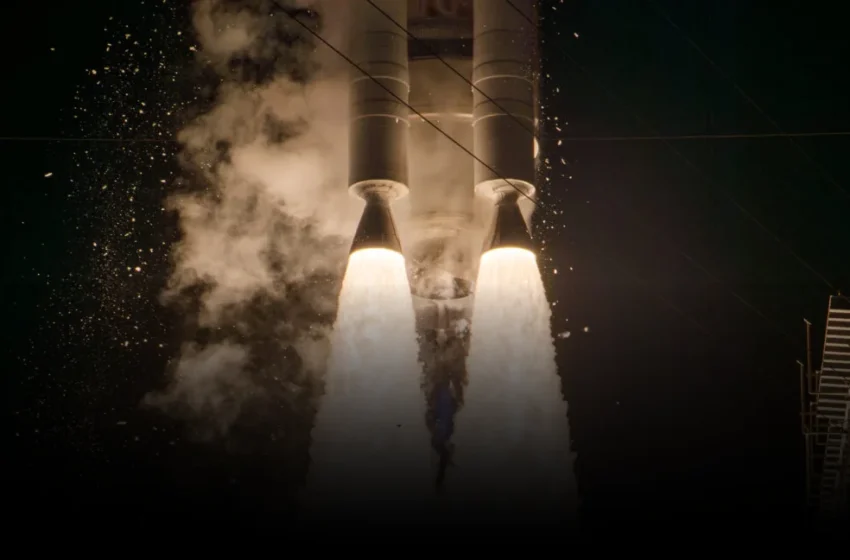
ULA Vulcan Launch Nears: A New Era for US Heavy-Lift Space, Challenging SpaceX Dominance
United Launch Alliance’s (ULA) Vulcan Centaur rocket is finally nearing its inaugural flight, tentatively set for October 29, promising to inject much-needed competition into the US heavy-lift launch market. This long-anticipated debut could significantly impact national security launches and the burgeoning satellite constellation industry, diversifying options beyond SpaceX’s dominant Falcon 9.
The successful deployment of critical US government and commercial payloads requires a robust and resilient launch infrastructure. For years, ULA has been a cornerstone of this capability with its Atlas V and Delta IV rockets. However, with the Delta IV Heavy set to retire and the Atlas V reliant on Russian-made RD-180 engines, the Vulcan Centaur is not merely a new rocket; it represents a strategic imperative for American access to space.
The Long Road to Vulcan: Why US Space Needs Competition
ULA, a joint venture between aerospace giants Boeing and Lockheed Martin, has long served as a primary launch provider for the US Department of Defense and other government agencies. Its workhorse Atlas V and Delta IV rockets have reliably launched everything from GPS satellites to Mars rovers. However, the geopolitical landscape and the need for next-generation capabilities prompted the development of Vulcan.
Vulcan’s design replaces the venerable Atlas and Delta lines, offering a more powerful, cost-effective, and eventually reusable platform. A key driver for Vulcan’s development, according to ULA, was the National Security Space Launch (NSSL) program from the US Space Force, which seeks assured access to space and increased competition among launch providers. The program aims to ensure that the nation can launch critical national security assets on multiple platforms, reducing reliance on any single company or technology.
The competitive backdrop is dominated by SpaceX, whose Falcon 9 and Falcon Heavy rockets have revolutionized the launch industry with their reusability and aggressive pricing. SpaceX’s success has put immense pressure on traditional providers like ULA, highlighting the need for innovation and efficiency. Vulcan is ULA’s answer, incorporating advanced technologies and a pathway to reusability, aiming to meet and exceed the capabilities of its competitors for heavy-lift missions.
Vulcan’s Inaugural Mission: More Than Just a Satellite Delivery
The first Vulcan Centaur launch, designated Certification-1 (Cert-1), is far from a routine satellite deployment. It’s a critical qualification flight, carrying two prototype satellites for Amazon’s Project Kuiper broadband constellation. Amazon has placed significant trust, and substantial investment, in ULA’s new rocket, contracting for 38 Vulcan launches to deploy its internet-beaming satellites.
This maiden voyage is an essential test of Vulcan’s entire system, including its powerful BE-4 main engines developed by Blue Origin, and its Centaur V upper stage. The successful deployment of Amazon’s Kuiper prototypes will not only validate Vulcan’s performance but also mark a crucial step for Amazon’s ambitious satellite internet plans. Any delays or issues could have ripple effects across the entire US space launch market.
The mission will also test the rocket’s ability to incorporate solid rocket boosters, which increase its lift capacity, a capability essential for its NSSL missions. A flawless performance is vital for ULA to secure full certification for national security missions and to demonstrate its reliability to a market hungry for diverse launch options.
Reshaping the US Heavy-Lift Landscape: What Vulcan Means for the Market
The entry of Vulcan Centaur into active service has profound implications for the US space economy. It immediately provides the US government and commercial operators with a second certified heavy-lift option, directly challenging SpaceX’s near-monopoly in certain launch segments. This increased competition is expected to drive innovation, potentially lower launch costs over time, and enhance the overall resilience of US space access.
For US national security, Vulcan offers crucial redundancy. Relying on a single launch provider, no matter how reliable, introduces systemic risk. Vulcan’s operational readiness means that if one provider faces a vehicle anomaly or production issue, vital government payloads still have an alternative route to orbit. This strategic diversification is paramount in an increasingly contested space domain.
The commercial sector, particularly the rapidly expanding satellite constellation market, also stands to benefit. Companies like Amazon Kuiper, which require numerous launches over a short period, gain from having multiple capable providers. This competition encourages both ULA and SpaceX to continually optimize their services, technology, and pricing, ultimately benefiting the entire ecosystem of US space companies and consumers reliant on space-based services.
South Korea’s Nuri Success: A Parallel Track in Global Space Development
While the US watches Vulcan, other nations are also making strides in independent launch capabilities. South Korea recently achieved a significant milestone with the successful fifth flight of its homegrown Nuri rocket. This mission successfully deployed five microsatellites for its New-space Earth Observation Satellite Constellation for National Safety, along with nine of ten secondary CubeSat payloads, as reported by Yonhap News Agency.
This success highlights a broader global trend: more countries are developing their own space launch vehicles and satellite technologies. For South Korea, Nuri represents a strategic capability for national security and scientific independence, akin to what Vulcan aims to solidify for the United States. While distinct in their market and scale, both developments underscore the global drive for reliable, independent access to space.
Conclusion: A New Chapter for US Launch
ULA’s Vulcan Centaur launch is more than just a new rocket taking flight; it represents a significant rebalancing in the US space launch market. Its success is vital for national security, commercial innovation, and sustained American leadership in space. The coming year, with multiple Vulcan missions planned, will be critical in establishing its reliability and solidifying its role as a key player in the heavy-lift sector.
- Vulcan offers crucial launch redundancy for US national security and government payloads.
- It injects meaningful competition into the heavy-lift launch market, potentially benefiting consumers and driving innovation.
- Amazon’s Project Kuiper is a key early beneficiary and investor in Vulcan’s success, demonstrating strong commercial confidence.
- The next year will be pivotal for ULA to establish Vulcan’s cadence and long-term reliability against established competitors.
- The global landscape sees increasing independence in space, exemplified by South Korea’s Nuri successes, mirroring a broader trend.
FAQ: What is the ULA Vulcan rocket?
The ULA Vulcan Centaur is a new heavy-lift launch vehicle developed by United Launch Alliance (ULA) to replace its Atlas V and Delta IV rockets. It’s designed to launch a wide range of payloads, including critical national security missions and large commercial satellite constellations, offering enhanced performance and a path to reusability.
Why is the Vulcan launch important for the US?
The Vulcan launch is crucial for the US because it introduces a new, competitive heavy-lift option, diversifying the nation’s access to space and reducing reliance on a single provider for national security missions. It also supports US commercial space endeavors, like Amazon’s Project Kuiper, by providing essential launch capacity.
How does Vulcan compare to SpaceX’s Falcon 9?
Vulcan is designed to be competitive with SpaceX’s Falcon 9 and Falcon Heavy for heavy-lift missions. While Falcon 9 currently boasts extensive reusability, Vulcan aims for high performance and, in future iterations, plans to recover its main engines for reuse, offering a different approach to cost-efficiency and mission flexibility for large and complex payloads.
